
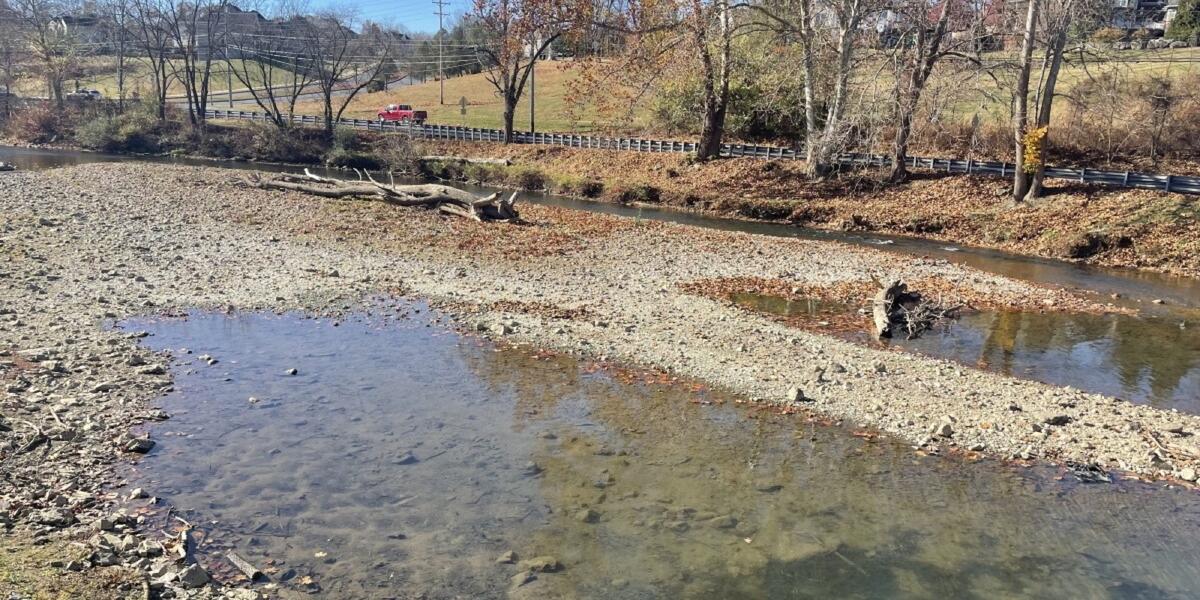
The Pennsylvania Department of Environmental Protection has declared a drought warning for Lehigh County, and the Lehigh County Authority is asking its customers to voluntarily reduce water use by 10 to 15 percent as groundwater levels and stream flows fall significantly below seasonal norms.
From Watch to Warning
As of June 29, 2026, DEP upgraded Lehigh County’s drought classification from watch to warning, reflecting a continued decline in the region’s water supply indicators. The Lehigh County Authority says current groundwater levels, stream flows, and overall supply conditions are significantly below normal for this time of year, an unusual deficit heading into the heart of summer.
Where Lehigh County's Water Comes From
The authority draws approximately 27 million gallons of water per day from a combination of sources: the Little Lehigh Creek, the Lehigh River, two natural springs, and a network of groundwater wells distributed throughout its service area. With multiple sources under simultaneous stress during peak demand season, officials say voluntary conservation is necessary to keep the system in balance.
What Customers Can Do
The authority is asking residents and businesses to cut back on outdoor irrigation, limit car washing, run dishwashers and washing machines only with full loads, and repair any leaking faucets or toilets. The 10 to 15 percent reduction is a voluntary target at this stage; a drought emergency declaration, which would trigger mandatory restrictions, has not been issued. More conservation tips are available at the authority’s website.
A Boom That Runs on Water
The conservation request lands at an unusual moment for Lehigh County, which has become one of the most sought-after markets in the country for large data centers. Several campuses have been floated across the region, including the roughly 725-megawatt Project Atlas campus in South Whitehall Township, a plan that has drawn packed meetings and organized opposition. The overlap has sharpened a question from residents: how does a county asking families to cut back square with new industrial users that can consume water on a scale households never approach?
The concern is not hypothetical. Data centers cool their servers in one of two broad ways, and the water-intensive method is still the industry norm. Roughly 75 to 90 percent of data centers worldwide rely on water-based cooling, according to industry researchers, and a single average hyperscale facility that uses evaporative cooling can draw on the order of 400,000 to 550,000 gallons of water a day, comparable to several thousand homes. The largest campuses can reach 1 to 5 million gallons a day at peak. For perspective, the Lehigh County Authority’s entire system delivers about 27 million gallons a day.
The Cooling Question
Developers are aware of the scrutiny. The team behind Project Atlas says the campus would use a closed-loop cooling system that consumes essentially no water for day-to-day operation, and it has claimed the waterless design would save nearly 2.85 billion gallons a year compared with a conventionally cooled facility of the same size. South Whitehall officials have noted that if the project is approved with air cooling, any later switch to water-based cooling would require additional township approval.
Critics are not reassured. Opponents, including former Parkland School Board candidate Dr. David Caruth, have pressed for enforceable, permanent commitments rather than design promises, and warn that large-scale excavation and acres of new impervious surface could still alter stormwater runoff and put long-term pressure on aquifers and the same streams the county draws from. Air cooling carries its own tradeoff: it uses more electricity, feeding the surging power demand that has already begun to push up local electric bills. The upshot is a debate now playing out in townships across the Lehigh Valley over how much of the region’s land, water, and power the industry should be allowed to draw on, and under what guarantees.
At a Glance
- DEP upgraded Lehigh County to drought warning status as of June 29, 2026
- Previous classification: drought watch
- Lehigh County Authority requests a voluntary 10–15% reduction in daily water use
- LCA draws approximately 27 million gallons per day from the Little Lehigh Creek, Lehigh River, natural springs, and groundwater wells
- Current supply levels are significantly below seasonal norms
- No drought emergency (mandatory restrictions) has been declared
- Lehigh County is weighing several large data centers, including the roughly 725-megawatt Project Atlas campus in South Whitehall
- Data centers on evaporative cooling can use hundreds of thousands to millions of gallons a day; 75 to 90 percent of the industry relies on water-based cooling
- Project Atlas’s developer says the campus would use a waterless closed-loop system saving about 2.85 billion gallons a year; critics want enforceable commitments and cite watershed and aquifer concerns