PPL Electric Utilities is positioning itself as one of the biggest power players in the artificial intelligence boom, courting tens of gigawatts of new data center demand for its Pennsylvania grid. At the same time, a rate increase takes effect July 1, and the central question for Lehigh Valley households is how much of that build-out they will end up paying for.
PPL is the dominant electric utility across the Lehigh Valley, and it sits in one of the hottest data center corridors in the country. The company is racing to connect power-hungry AI computing campuses while regulators, consumer advocates, and lawmakers fight over who should foot the bill for the massive infrastructure that growth requires.
What's Changing on Your Bill
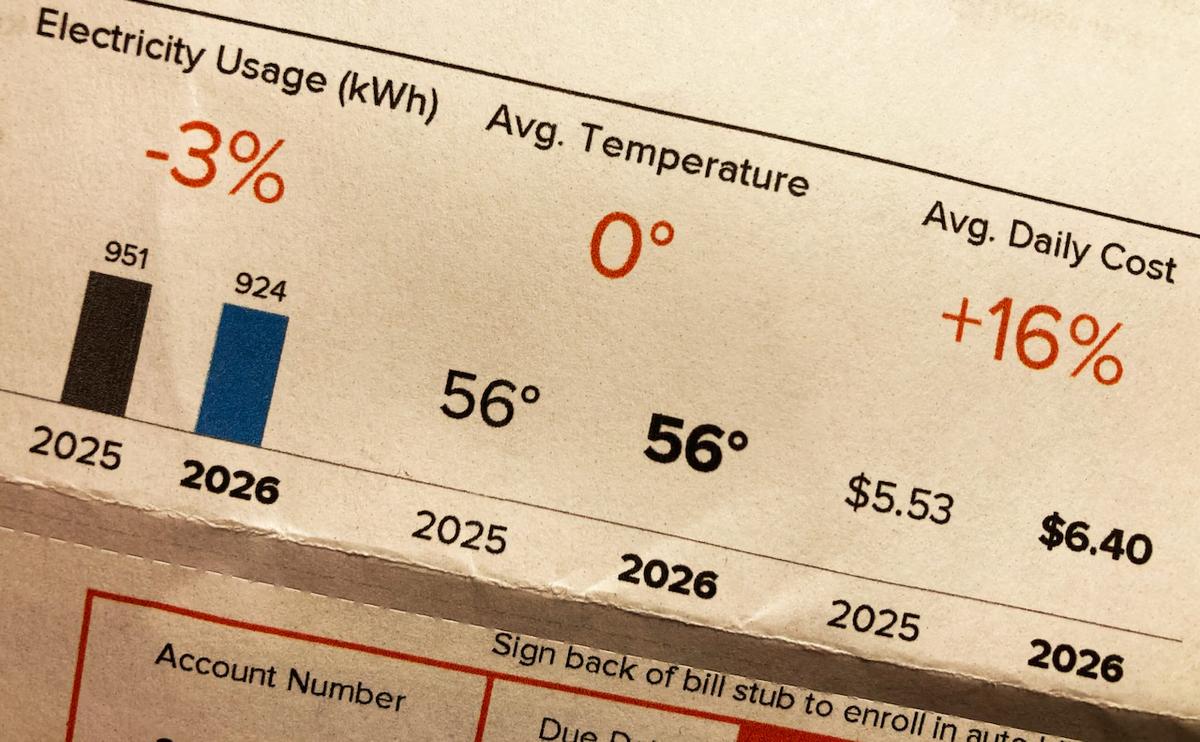
On June 4, 2026, the Pennsylvania Public Utility Commission voted 5-0 to approve a settlement allowing PPL to raise its base distribution rates, the part of the bill that pays for maintaining poles, wires, and substations. For a typical home using 1,000 kilowatt-hours a month, that adds about $6.48 a month, roughly 3.23%, starting July 1. It is PPL's first base distribution increase since 2016, and the approved amount was more than $80 million below what the company originally sought. PPL also agreed to a two-year “stay-out,” barring another base rate request until 2028.
The supply portion of the bill, the “price to compare”, rose only slightly on June 1, from about 12.95 to 13.15 cents per kilowatt-hour, one of the smaller adjustments among Pennsylvania utilities, some of which warned of supply increases as high as 20%.
PPL Goes All-In on Data Centers
The bigger story is what's coming. Data center developers have expressed interest in more than 60 gigawatts of potential projects within PPL's Pennsylvania territory, a staggering amount of electricity, with roughly 28 gigawatts already in advanced stages of planning and about 5 gigawatts under construction.
To serve that load, PPL projects a 6-gigawatt generation shortfall over the next five to six years, an estimated $15 billion investment need. In July 2025, the company formed a joint venture with Blackstone Infrastructure to build new natural gas power plants in Pennsylvania aimed squarely at data center demand, paired with a dedicated $6.8 billion for grid modernization in the state. Across its utilities in Pennsylvania, Kentucky, and Rhode Island, PPL expects to spend roughly $20 billion on infrastructure between 2025 and 2028.
For PPL, the AI boom is a generational growth opportunity. For ratepayers, it raises the stakes on a single question: when the grid has to expand to serve giant new users, who pays?
The Market Forces Pushing Bills Up
Some of the upward pressure is already here, through the regional power market run by PJM Interconnection, which coordinates electricity across Pennsylvania and 12 other states. In PJM's most recent capacity auction, the price the grid pays to ensure enough power is available, costs hit a record $16.4 billion for the 2027-28 delivery year. PJM's market monitor found data centers accounted for about $6.5 billion, or 40%, of that total.
PJM expects peak demand to grow 32 gigawatts between 2024 and 2030, with all but 2 gigawatts coming from data centers. Pennsylvania Gov. Josh Shapiro negotiated a temporary price cap that held the latest capacity price to $333.44 per megawatt-day; without it, officials say it would have run about 60% higher, saving the average household an estimated $126 in the 2027-28 year. That cap has since expired ahead of the next auction.
Who Pays for the Build-Out?
The most contentious issue is infrastructure cost. Under longstanding Pennsylvania rules, when a large customer needs new power lines or substations, those costs can be spread across all customers as long as there is “some collective benefit.” As data center projects multiply, consumer advocates warned that ordinary households could wind up subsidizing billions in build-out for facilities that benefit a handful of tech firms, with few guardrails to prevent it.
That is the real basis for the worry that PPL customers are financing the AI boom: not a single discount handed to data centers, but a decades-old cost-sharing structure never designed for electricity users this large, combined with a utility now aggressively pursuing that load.
A Landmark Settlement Meant to Protect Ratepayers
PPL's rate case became the proving ground. The settlement, reached with more than a dozen intervenors including the state's consumer advocates, environmental and community groups, and large power users such as Walmart, is the first time a Pennsylvania utility has agreed to shield average ratepayers from data center costs.
It creates a new rate class for “large load” customers like data centers, with stricter terms: minimum 10-year service commitments, minimum-usage guarantees, and protections so that if a developer abandons a planned project, residential customers aren't stuck paying for stranded infrastructure. Starting in 2027, a non-bypassable charge on those large-load customers will also steer about $11 million a year into low-income assistance, costs previously borne solely by residential customers.
“The commission has taken deliberate steps to ensure that the costs created by new load and generation patterns, including the unique demands of large data centers, do not fall unfairly on existing rate payers,” said PUC Commissioner Kathryn Zerfuss.
PUC Chairman Steve DeFrank said the deal “significantly reduces the company's original request while also securing meaningful commitments related to reliability, customer service, low-income assistance, and accountability.” PPL President Christine Martin said it “enables us to continue making critical investments to strengthen reliability.” In April 2026, the PUC moved to extend the approach statewide with a model “large load tariff framework” built on the principle that customers driving new infrastructure should pay for it.
What It Means for the Lehigh Valley
Lehigh Valley households will see the roughly $6.48 monthly increase beginning in July, with base rates frozen from further increases for two years. But the defining issue, how much of PPL's multibillion-dollar data center build-out ultimately lands on residential bills, will unfold over years as more AI projects seek to plug in. The PPL settlement is being watched nationally as a potential template for keeping those costs with the companies that create them.
What You Can Do About Your Bill
While the bigger policy questions play out, PPL customers have several concrete ways to manage rising costs:
Shop your supply rate. The supply portion of your bill is competitive. At the state's official, free comparison site, PAPowerSwitch.com, you can compare licensed suppliers against PPL's “price to compare” (about 13.15 cents per kilowatt-hour). Watch for variable-rate plans and teaser rates that spike after an introductory period.
Smooth out seasonal spikes with budget billing. PPL's budget billing averages your usage across the year so summer and winter bills stay predictable.
Check whether you qualify for assistance. PPL and state programs help income-eligible households:
LIHEAP, federal grants of up to $2,000 toward energy bills; you do not need a past-due balance to apply.
OnTrack, fixed, reduced monthly payments and debt forgiveness for qualifying customers.
Operation HELP, cash grants for customers facing hardship.
WRAP, free energy-saving products and services that lower your usage.
Set up a payment arrangement. If you've fallen behind, PPL can spread an overdue balance into manageable installments to help avoid a shutoff.
Trim the usage that costs the most. Heating and cooling drive most bills, a programmable thermostat, LED lighting, and sealing air leaks deliver the biggest savings.
Details on every program are available at pplelectric.com/BillHelp or by calling PPL customer service.
PPL, Data Centers and Your Bill at a Glance
Distribution increase: +3.23%, about $6.48/month for a typical home, effective July 1, 2026 (first since 2016)
Supply (price to compare): up slightly June 1, ~12.95 to ~13.15 cents/kWh, among the smallest in PA
Data center interest in PPL territory: 60+ GW potential, ~28 GW advanced, ~5 GW under construction
PPL investment: ~$15B generation need, $6.8B grid modernization via a Blackstone JV, ~$20B total infrastructure 2025-2028
PJM capacity costs: record $16.4B for 2027-28; data centers ~40% ($6.5B)
Ratepayer protection: first-in-PA “large load” rate class; $11M/year for low-income programs from data center charges starting 2027