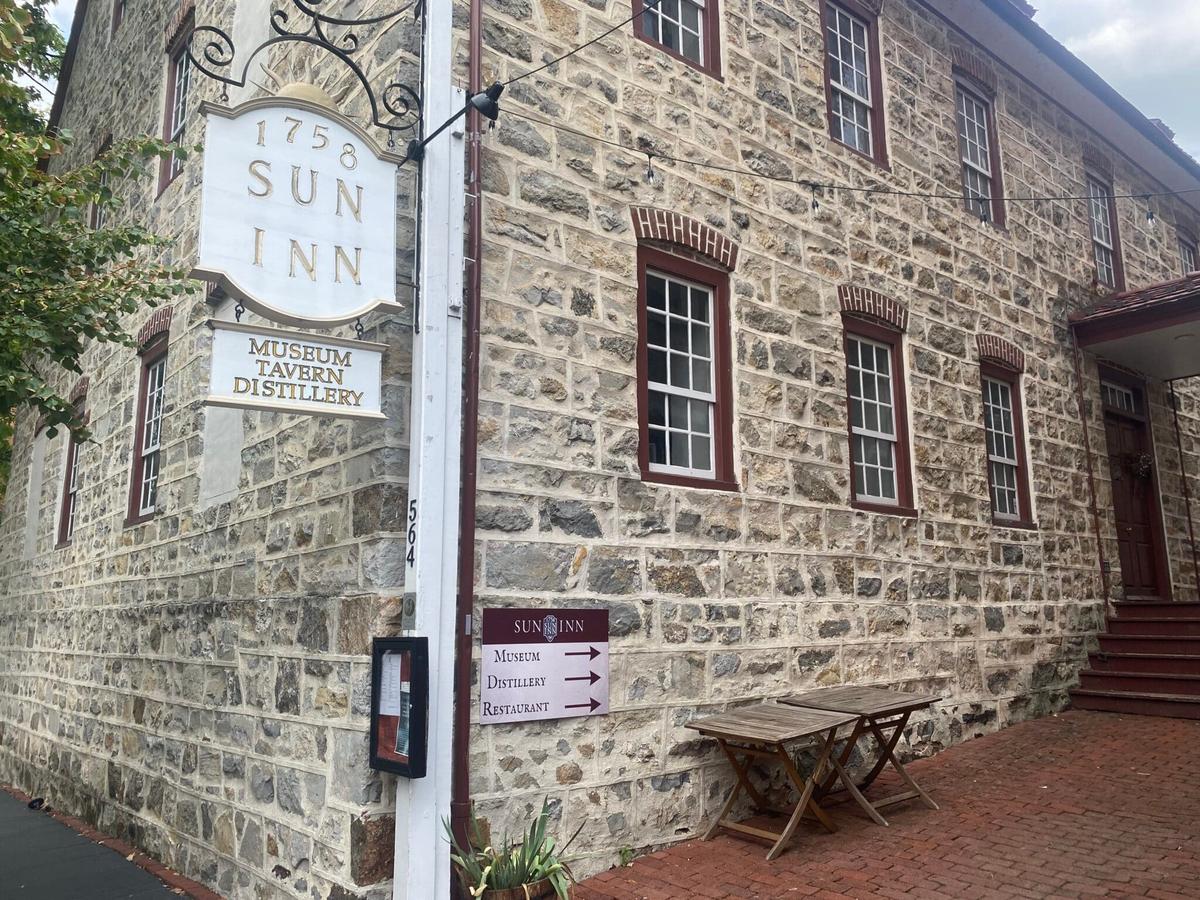
In an age when travel was arduous and accommodations were often primitive, the Sun Inn of Bethlehem stood apart. Built by the Moravians in 1758, it quickly became one of the most celebrated establishments in colonial America: renowned for its excellent food, warm hospitality, and comfortable rooms. The guest list reads like a roster of American history.
Moravian Hospitality
The Moravians built the Sun Inn not merely as a business venture but as an expression of their deep commitment to hospitality, a value rooted in their faith. The inn was designed to welcome travelers passing through the Lehigh Valley on the critical route between Philadelphia and points north and west.
The quality of the establishment was noted by virtually every prominent visitor. The food was considered exceptional by colonial standards, the rooms were clean and comfortable, and the Moravian staff brought a warmth and attentiveness that travelers rarely encountered elsewhere on the frontier.
A Guest Book of Giants
The list of guests who stayed at the Sun Inn is extraordinary. George and Martha Washington visited during the Revolution, as did Alexander Hamilton. John and Abigail Adams patronized the inn. Five men who would become Presidents of the United States walked through its doors, along with signers of the Declaration of Independence, including George Taylor, Pennsylvanias own signer.
The Sun Inn served as a critical stopping point for travelers between Philadelphia and New York, as well as those heading westward into the frontier. During the Revolution, it became a gathering place for military and political leaders coordinating the war effort in the mid-Atlantic region.
The Revolution Comes to Bethlehem
During the American Revolution, Bethlehems location and the quality of its facilities made it a natural hub for the Continental Army. The Moravian community, though committed to pacifism, found itself hosting soldiers, treating wounded, and providing supplies. The Sun Inn became a center of military activity, with officers planning campaigns and dignitaries meeting to discuss the course of the war.
The intersection of Moravian peace and revolutionary war created a unique chapter in Bethlehems history, one in which the communitys hospitality was tested and ultimately strengthened by the extraordinary demands of the era.
Preservation and Legacy
The Sun Inn survived into the modern era through multiple renovations, with floors and rooms added over the centuries. The building was used for various commercial purposes before closing to travelers in the early 1960s. In 1982, it was restored as a historical site, preserving the structure that had hosted so many of Americas founders.
Just steps away, the Historic Hotel Bethlehem continues the tradition of hospitality that the Moravians established at the Sun Inn. The hotel, which had its grand opening in 1922 under the direction of Bethlehem Steel magnate Charles M. Schwab, was built on the site of Bethlehems original "First House" adjacent to the Moravian Church Settlements. It has been named the number-one historic hotel in the country.
From the Sun Inn to the Historic Hotel Bethlehem, the tradition of welcoming strangers has been central to this community for nearly three centuries. In Bethlehem, hospitality is not just a business: it is a calling.