For more than a century, the blast furnaces of Bethlehem Steel dominated the skyline along the Lehigh River, their orange glow visible for miles at night. At its peak, the corporation occupied 1,800 acres and employed tens of thousands of workers who forged the steel that built modern America. The story of Bethlehem Steel is inseparable from the story of the Lehigh Valley itself.
From Iron to Steel
The Bethlehem Iron Company was organized in 1857, drawing on the regions rich deposits of iron ore and limestone. The companys early years were modest, producing railroad rails and other basic iron products. But it was the arrival of John Fritz (a brilliant, self-taught engineer) that transformed the operation into something far more ambitious.
Fritz imported heavy-forging equipment from England and France and pushed the company into the market for battleship armor and heavy ordnance. By the time the Bethlehem Steel Company was formally founded in 1899, and the Bethlehem Steel Corporation created in 1904 under the legendary Charles M. Schwab, the company was already earning its reputation as the "Arsenal of America."
Building the American Skyline
Bethlehem Steel pioneered new methods of structural steel manufacture that made the modern skyscraper possible. The companys wide-flange structural beams, the iconic H-shaped and I-shaped beams that form the skeletons of tall buildings, were a Bethlehem innovation. Without this steel, eighty percent of New York Citys skyscrapers simply would not exist.
The companys steel spans some of the most iconic structures in American history. The Golden Gate Bridge, the George Washington Bridge, the Waldorf-Astoria Hotel, Rockefeller Center, the U.S. Supreme Court building, and Madison Square Garden all rose on Bethlehem steel. When you cross the Ben Franklin Bridge from Philadelphia to Camden, you are riding on Bethlehem steel.
The Arsenal of Democracy
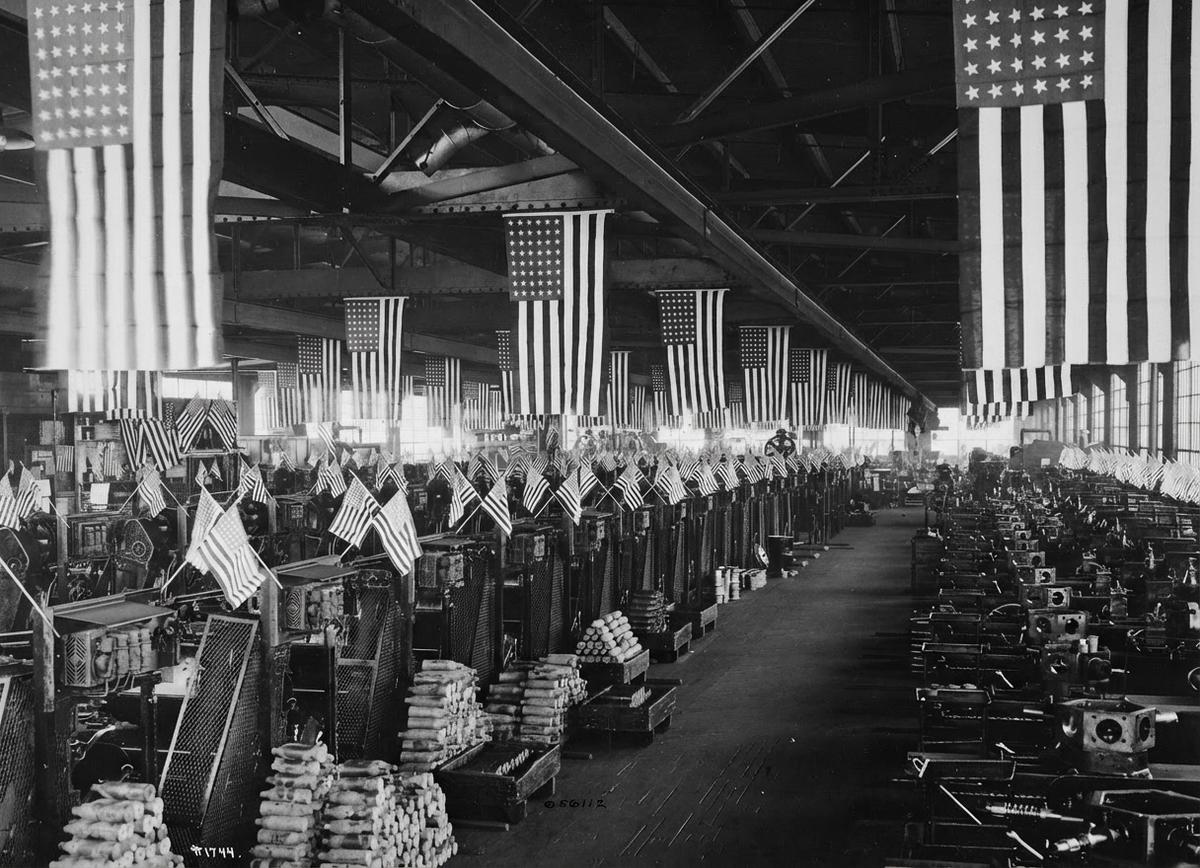
World War I transformed Bethlehem Steel from a major American company into a global industrial power. The massive demand for munitions, armor plate, and naval guns provided the financing for expansion that made Bethlehem the worlds second-largest steel maker, trailing only U.S. Steel.
World War II brought even greater demands. The companys shipyards produced over 1,100 ships for the Allied war effort, while its Bethlehem plants ran around the clock forging armor plate, gun forgings, and structural steel for military installations. The phrase "Arsenal of America" was not hyperbole: it was a simple statement of fact.
Decline and Fall
The seeds of Bethlehem Steels decline were sown in the prosperous decades after World War II. Foreign competition (particularly from rebuilt Japanese and German steel industries using newer, more efficient technologies) began to erode market share. Rising labor costs and aging plants compounded the problem.
In 1982, the company suspended most steelmaking operations in Bethlehem after posting a staggering $1.5 billion loss. The blast furnaces that had burned continuously for decades went cold. Thousands of workers lost their jobs in a single stroke, devastating families and communities throughout the Lehigh Valley.
Bethlehem Steel limped on for two more decades, but the end was inevitable. The corporation filed for bankruptcy in 2001 and was formally dissolved in 2003 after its remaining assets were sold to International Steel Group. An industrial giant that had shaped a nation for over a century was gone.
The Legacy Endures
Today, the massive blast furnaces still stand along the Lehigh River, preserved as monuments to an industrial age that built modern America. The SteelStacks arts campus, Wind Creek casino, and surrounding developments have given the site new life. But for those who remember the orange glow and the rumble of the furnaces, the legacy of Bethlehem Steel lives in something deeper than buildings: it lives in the identity of a region that helped forge a nation.