
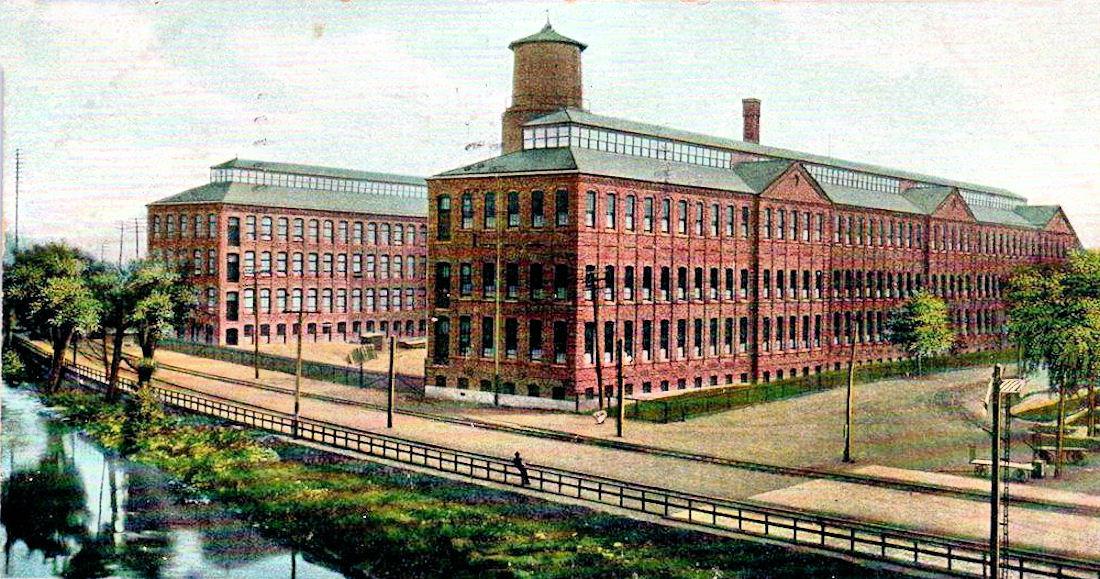
Long before the blast furnaces of Bethlehem Steel came to define the Lehigh Valleys industrial identity, another industry had already established the region as a manufacturing powerhouse. The silk mills of the Lehigh Valley employed thousands, produced fabric that dressed the nation, and created a distinct industrial culture that shaped communities for generations.
The Adelaide Mill and the Birth of an Industry
The silk industry arrived in the Lehigh Valley in November 1881, when the Adelaide Silk Mill opened its doors. The region offered everything the industry needed: abundant water power from the Lehigh River and its tributaries, a ready workforce of immigrant families, and proximity to the markets of New York and Philadelphia via rail.
The industry grew with remarkable speed. By 1900, twenty-three silk establishments were operating in the Lehigh Valley, making Pennsylvania the worlds second-largest producer of silk after New Jersey. The Lehigh Valley was becoming "Silk City", a name that reflected not just an industry, but a way of life.
The Peak: 106 Mills
The silk industry reached its zenith in 1928, when an astonishing 106 mills operated simultaneously across the Lehigh Valley. The sound of looms was the soundtrack of entire neighborhoods. One-third of all American silk workers were Pennsylvanians, and the industry was the largest industrial employer of women in the region: sixty percent of silk workers were female.
Working conditions were demanding. Workers labored 48 to 54 hours per week across two or three eight-hour shifts, often without lunch breaks. Women were consistently paid less than men for the same work. The mills were hot in summer, cold in winter, and always loud. Yet for immigrant families (many of them from Italy, Eastern Europe, and the Middle East), the mills offered steady employment and a foothold in American life.
The Culture of the Mills
The silk mills created their own social world. Workers lived in company housing near the mills, shopped at company stores, and socialized with fellow workers. The mills sponsored sports teams, social clubs, and community events. Neighborhoods like Allentowns Sixth Ward became tightly knit communities where everyone knew someone who worked at the mill.
The products of the Lehigh Valleys looms were extraordinary. Fine silk fabrics, ribbons, and textiles flowed from the valley to clothiers and retailers across the country. The silk industry connected the Lehigh Valley to global fashion in ways that few outside the region appreciated.
Decline and Legacy
The demise of the silk industry came from multiple directions. The Great Depression devastated demand. Southern states lured mills away with cheaper labor and lower taxes. Most decisively, the invention of synthetic fabrics, particularly nylon and rayon, undercut the market for natural silk.
By 1953, the number of looms in Allentown had decreased by eighty percent, with only six mills working exclusively with silk. The Catoir Silk Co., established in 1918, was the last silk mill in Allentown, finally closing in 1989. An industry that had once employed thousands and filled the air with the clatter of looms fell silent.
Today, many of the old mill buildings still stand, converted to apartments, offices, and retail space. They are monuments to an era when the Lehigh Valley dressed the world in silk, and when the labor of thousands of women and men wove a community as tightly as any fabric.