
If you have ever driven across a bridge, walked into a skyscraper, or traveled through a subway tunnel in America, there is a good chance that Lehigh Valley cement helped build it. Yet the regions cement industry, once the dominant force in American construction, remains one of the least celebrated chapters in Lehigh Valley history.
Saylors Discovery
In 1866, David O. Saylor, along with Esias Rehrig and Adam Woolever, founded the Coplay Cement Company in the small borough of Coplay, just north of Allentown. The company initially produced natural cement, a weaker product made by burning naturally occurring cement rock. But Saylor had bigger ambitions.
Through experimentation, Saylor discovered that the raw materials found in his own quarry in the Lehigh Valley could be combined and fired to produce Portland cement, a far stronger and more versatile product that had been invented in England but never successfully manufactured in America. In 1871, Saylor received the first American patent for Portland cement, launching an industry revolution.
72 Percent of American Production
The impact was swift and enormous. The Lehigh Valley possessed the perfect combination of raw materials, limestone and shale in exactly the right proportions, abundant coal for fuel, and excellent rail connections for shipping. Cement companies proliferated throughout the region.
By 1900, the Lehigh Valley produced an astonishing 72 percent of all Portland cement manufactured in the United States. The regions cement was shipped by rail across the country, used to build bridges, docks, jetties, roads, aqueducts, subways, and the foundations of skyscrapers. The Lehigh Valley was, quite literally, the foundation upon which modern America was built.
The Kilns of Coplay
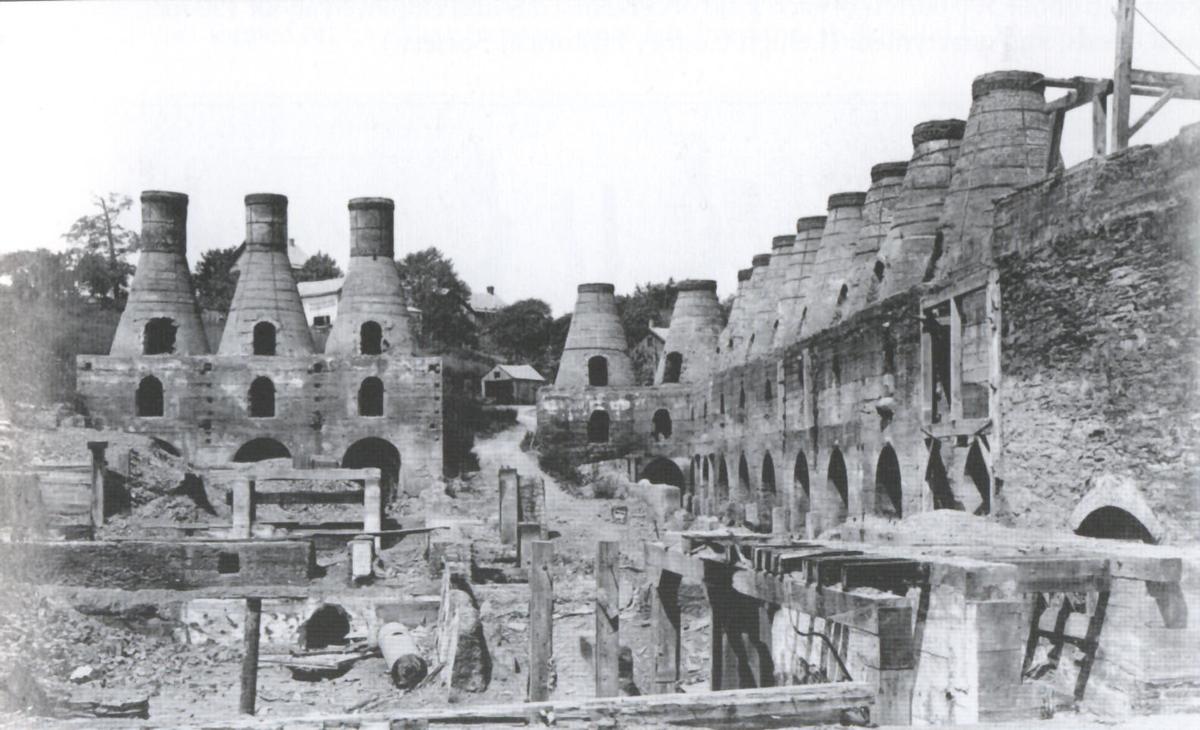
At the Coplay Cement Companys original site, nine historic Schoefer vertical kilns were built between 1892 and 1893 for Portland cement production. These massive stone structures, towering cylinders that burned raw materials at extreme temperatures, were the engines of the cement revolution. They operated until 1904, when newer rotary kiln technology made them obsolete.
The Coplay Cement Company later donated the kilns and surrounding land to Lehigh County in 1975 for a cement industry museum. Today, these kilns stand as rare surviving examples of nineteenth-century cement technology, a monument to the industry that once made the Lehigh Valley the cement capital of America.
The Forgotten Giant
The cement industrys importance to the Lehigh Valley rivaled that of Bethlehem Steel, yet it rarely receives the same attention. Perhaps this is because cement lacks the dramatic visual spectacle of molten steel. Perhaps it is because the industry was dispersed across dozens of companies and communities rather than concentrated in a single corporation.
But the next time you cross a bridge, climb a set of concrete stairs, or walk along a sidewalk, consider this: there is a very good chance that the material beneath your feet traces its origins to the Lehigh Valley: to the quarries of Coplay, to the vision of David O. Saylor, and to the industry that literally cemented America together.