The story of Lehigh University begins not in a boardroom or a university hall, but in the hardscrabble childhood of a Connecticut farm boy who would become one of the wealthiest men in nineteenth-century America. Asa Packers journey from poverty to railroad magnate to educational philanthropist is one of the great American stories, and it gave the Lehigh Valley one of its most enduring institutions.
From Carpenter to Railroad Baron
Asa Packer was born in 1805 in Mystic, Connecticut, to a family of modest means. He received little formal education, apprenticing as a carpenter and working as a farmer before migrating to Pennsylvania in the 1830s. In the Lehigh Valley, he found his calling in the canal business, building and operating boats on the Lehigh Canal that carried coal from the mines to market.
But Packer recognized that canals were yesterdays technology. Railroads were the future. In 1847, he helped incorporate what would become the Lehigh Valley Railroad, and over the following decades, he built it into one of the great railroads of the American East, connecting the anthracite coal fields to the ports and cities of the seaboard.
The railroad made Packer fabulously wealthy, wealthy enough to serve in the U.S. Congress and to become a serious candidate for the Democratic presidential nomination. But Packers most lasting contribution would be neither political nor commercial.
The Largest Gift in History
On July 27, 1865, just months after the end of the Civil War, Asa Packer donated 57 acres of land on Bethlehems South Mountain along with $500,000 in cash to establish Lehigh University. At the time, it was the largest gift ever made to an educational institution in America.
The university was founded to provide "thorough education" in civil engineering, mechanical engineering, mining engineering, chemistry, metallurgy, classics, and general literature. Packers vision was practical: the Lehigh Valley needed educated engineers and scientists to fuel its industrial growth, and he would create the institution to train them.
The Lafayette Snub
The roots of Lehighs founding contain a delicious piece of rivalry lore. Before establishing his own university, Packer had been approached by Lafayette College in nearby Easton to fund an engineering school. But when Packer learned that Lafayette was a Presbyterian-affiliated institution, the devout Episcopalian declined and decided to found his own university instead.
This religious snub would give birth to what is now the most-played rivalry in all of college football, with Lafayette and Lehigh meeting on the gridiron every year since 1884.
Free Education and Lasting Legacy
Thanks to Packers generous endowment, Lehigh University offered tuition-free education for its first twenty years, from 1871 to 1891. Students from across the region could receive a world-class engineering education without cost, a remarkable act of democratic philanthropy in the Gilded Age.
Packer Hall, the first main building, was completed in 1869, and instruction began in 1866. The university grew rapidly, and by the turn of the century, it had established itself as one of the premier engineering schools in the nation.
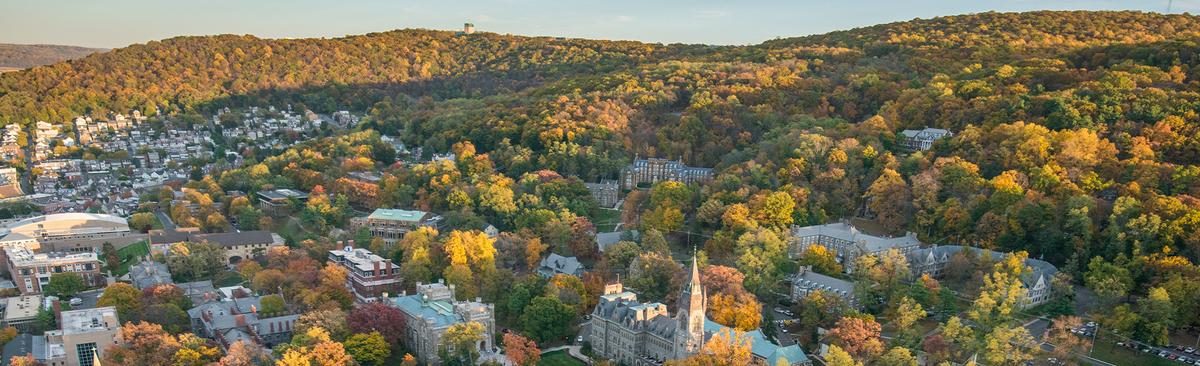
Today, Lehigh University is a top-tier research institution with over 7,000 students, ranked among the best universities in the country. Its campus on South Mountain still overlooks the city of Bethlehem and the Lehigh Valley that Asa Packers railroad helped build. The carpenters son from Connecticut built something that has outlasted every mile of track and every ton of coal, a place of learning that continues to shape minds and futures more than 160 years after its founding.