Walk down Hamilton Street in Allentown today and you are walking on ground that has been at the center of Lehigh Valley life for more than 260 years. Named for James Hamilton, the brother-in-law of city founder William Allen, this street has seen colonial settlers, industrial barons, department store shoppers, and a new generation of entrepreneurs, each leaving their mark on the avenue that defines Allentown.
The Founding of Northampton Towne
Allentown was founded in 1762 by William Allen, a powerful Philadelphia businessman who served as mayor of Philadelphia and later chief justice of Pennsylvania. Allen purchased a large tract of land along the Lehigh River and commissioned a town plan that was remarkably orderly for its time: 42 city blocks containing 756 lots, mostly 60 feet wide and 230 feet deep, laid out between present-day 4th and 10th Streets.
The city was initially called Northampton Towne, and many of its streets were named for Allens children: Margaret (now 5th Street), William (now 6th Street), James (now 8th Street), Ann (now 9th Street), and John (now Walnut Street). Hamilton Street itself honored James Hamilton, connecting the personal history of a single family to the geography of an entire city.
The Commercial Golden Age
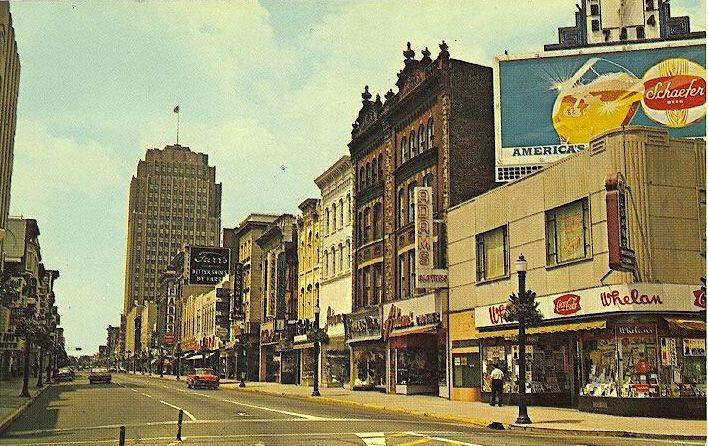
By the late nineteenth century, Hamilton Street had emerged as the commercial spine of the Lehigh Valley. The stretch between 5th and 10th Streets became the regions premier shopping district, anchored by department stores that drew customers from miles around.
Hess Brothers held court at 9th and Hamilton, while Zollinger-Harned Company occupied another stretch of the street. Between these anchors, smaller specialty shops, jewelers, milliners, and restaurants created a vibrant commercial ecosystem. On a Saturday afternoon in the 1950s, Hamilton Street was the place to be: families strolling, shoppers browsing, moviegoers lining up at the ornate theaters that dotted the avenue.
The street was more than a shopping district. It was the civic heart of Allentown, home to banks, offices, churches, and public buildings. The Soldiers and Sailors Monument stood as a reminder of sacrifice, while the PP&L buildings art deco tower became an iconic element of the skyline.
Suburbanization and Decline
The forces that reshaped Hamilton Street were the same forces that reshaped downtowns across America. The construction of the interstate highway system, the growth of suburban shopping malls, and the flight of middle-class families to outlying communities drained the commercial vitality from Center City.
The Lehigh Valley Mall opened in Whitehall Township in 1976, offering climate-controlled shopping with ample free parking, a combination that downtown could not match. One by one, the stores that had made Hamilton Street a destination closed or relocated. The closure of Hesss flagship in 1996 was the symbolic end of an era, though the decline had been underway for decades.
Reinvention
Today, Hamilton Street is writing a new chapter. The Neighborhood Improvement Zone, established in 2009, has catalyzed hundreds of millions of dollars in new development. The PPL Center arena brought professional hockey and major concerts to the heart of downtown. New restaurants, bars, and businesses have begun to fill storefronts that stood empty for years.
Allentown remains the third-largest city in Pennsylvania, and Hamilton Street remains its main street. The golden age of department stores may be gone, but the avenue that William Allen laid out more than two and a half centuries ago continues to evolve, reflecting each generations vision of what a city center can be.