
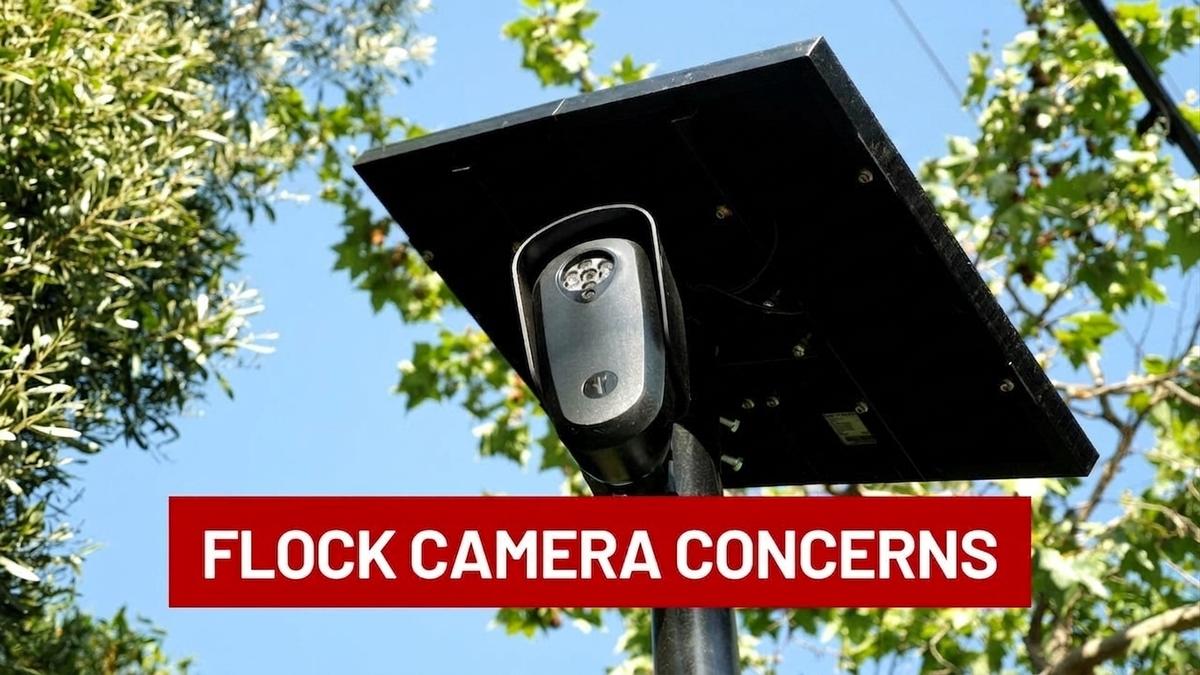
Automated license plate cameras made by the surveillance company Flock Safety have quietly spread across the Lehigh Valley over the past two years, blanketing Allentown, arriving in Bethlehem and getting turned away in Easton, even as a national backlash grows over how the cameras’ data is stored, shared and, increasingly, tapped by federal immigration agents.
What a Flock Camera Actually Does
Flock’s cameras are automated license plate readers, or ALPRs: solar-powered devices, usually mounted on poles along roads, that photograph the back of every passing vehicle. Beyond the license plate, the company’s software records what it calls a “Vehicle Fingerprint”, make, model, color and distinguishing details such as bumper stickers, roof racks or dents. Those reads are checked against “hot lists” of stolen cars, Amber Alerts and vehicles wanted in connection with crimes, and officers get an alert when a match rolls past.
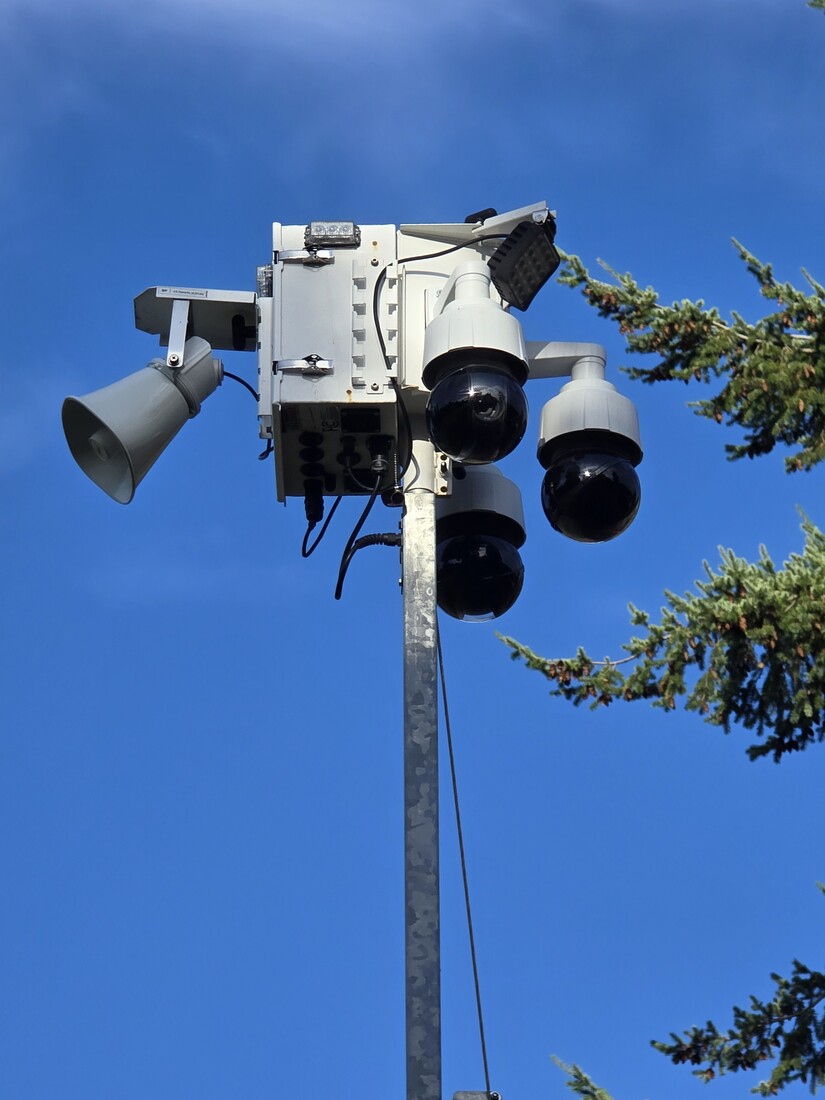
The images are uploaded to a cloud database where, by default, they are automatically deleted after 30 days. But the data is not necessarily confined to the town that collected it. Flock operates a national network that links more than 4,000 communities and logs billions of plate reads a month, and participating agencies can search across it, a feature that is central both to the technology’s crime-fighting appeal and to the fears it raises. Some Flock deployments also include “Raven,” a gunshot-detection system that listens for shots and pinpoints them for police.
Where They Are, and Aren’t, in the Lehigh Valley
Allentown has gone the furthest. The city announced in January 2024 that it would deploy 67 Flock license plate readers citywide, along with Raven gunshot-detection devices covering roughly a square mile of Center City, funded by $4.1 million in grants from the Pennsylvania Commission on Crime and Delinquency. Police Chief Charles Roca has described the technology as a way to “find that clue” and hold offenders accountable, and Mayor Matt Tuerk has framed it as better data for better decisions. The city says it owns all the data, which is deleted after 30 days and, according to Flock, can never be sold or shared with private third parties.
Bethlehem followed, with its police department rolling out Flock license plate readers in 2024 alongside a voluntary “Community Camera Program” that lets residents and businesses register or link their own security cameras with police. Officials there have pitched the readers as a tool to recover stolen vehicles and property through real-time alerts.
Easton went the other way. In February, the City Council voted 6–1 to reject a Flock proposal to mount a camera on a city-owned pole, after residents packed a meeting to object. Mayor Sal Panto Jr. cast the lone vote in favor, calling Easton “the safest city in the Lehigh Valley” while adding that he was “very cognizant of the concerns.” Council members and residents cited the risk of data breaches, data brokering and the targeting of immigrants and racial minorities; Councilwoman Julie Zando-Dennis said Flock cameras were not welcome in the city unless the guardrails recommended by the American Civil Liberties Union were in place.
The Case Police Make
For departments that use them, the readers have produced results. Allentown police credited nearby cameras and license plate readers with helping identify a suspect’s vehicle and make arrests after a fatal June shooting at Fountain Park. Supporters point to stolen vehicles recovered, Amber Alert suspects located and investigations shortened from days to minutes, and argue that a plate photographed on a public street carries no expectation of privacy. Flock says short 30-day retention and city ownership of the data are built-in protections. “We don’t believe that data needs to be held for months or even years,” a company spokesperson said of Allentown’s system.
The Backlash: Surveillance and Immigration
Nationally, the mood has shifted sharply. NPR reported in early 2026 that more than 55 communities had canceled their Flock contracts within a single year, many over fears the cameras had become a tool of federal immigration enforcement. Investigations and audits of Flock’s own logs have found that local police in some jurisdictions ran searches on behalf of federal agencies, sometimes typing “ICE” or “immigration” as the stated reason, giving agencies such as Immigration and Customs Enforcement and Customs and Border Protection what critics call “side-door” access to a system they hold no formal contract to use. In Bend, Oregon, federal immigration officials queried the local Flock database 279 times in the first three weeks of a pilot program; audits in Washington state found apparent “back-door” Border Patrol access to at least 10 police networks.
Flock is also facing a class-action lawsuit alleging it illegally shared California drivers’ location data with federal agencies, and the ACLU has accused the company of repeatedly misleading city councils about how its network works, including that data can be shared even when a department believes it has opted out. In one widely cited case, a Texas sheriff used Flock data to track a woman who had had an abortion. Amid the pressure, Flock in January 2026 added a setting letting agencies switch off all federal data sharing with a single toggle, and several states have passed laws restricting how plate-reader data can be used.
A Backlash That Skews Young
Much of the most organized resistance is coming from students and young digital-rights activists. The clearest example is DeFlock, a crowdsourced map begun by an Alabama software engineer that has plotted the locations of well over 100,000 license plate readers nationwide; a companion site, HaveIBeenFlocked.com, lets drivers check whether their own plate has been logged. When Flock sent the mapmaker a cease-and-desist letter, he refused, backed by the Electronic Frontier Foundation.
The pushback has been especially visible on college campuses. At Emory University, a student-led coalition delivered a petition with roughly 1,000 signatures demanding the school drop its Flock cameras, and students at the University of Louisville and Penn State have mounted their own campaigns and surveillance-mapping projects. That energy has a local echo: it was Lafayette College’s student newspaper that chronicled Easton’s rejection of the technology.
The revolt has also spilled into the streets. The ACLU has launched a “Get the Flock Out” campaign against the roughly 80,000 to 100,000 Flock devices now installed nationwide, and in at least five states people have physically destroyed cameras, cutting them down, smashing them or spray-painting their lenses. Police have made arrests in some cases and call the vandalism costly and dangerous. But the sheer spread of the sabotage, alongside the petitions and the mapping projects, points to a generational unease with being tracked that the technology’s rapid rollout has done little to quiet.
What It Means Here
For Lehigh Valley residents, the split decisions in Allentown, Bethlehem and Easton capture a debate that is far from settled. The cameras can help police solve real crimes, and they can also quietly build a searchable record of where ordinary people drive, reachable by agencies far beyond the local department that installed them. As more of the region falls under their gaze, the questions Easton’s council raised are the ones every community is now weighing: who gets to search the data, how long it is kept, what happens if it is breached and whether federal agencies can reach it. For now, the answer in the Lehigh Valley depends on which town you drive through.
At a Glance
- Flock Safety makes automated license plate reader (ALPR) cameras that log every passing vehicle’s plate and a “Vehicle Fingerprint,” checked against police “hot lists.”
- Allentown has deployed 67 Flock cameras plus gunshot detection, funded by $4.1 million in state grants; data is kept 30 days.
- Bethlehem police added Flock readers in 2024 alongside a voluntary community-camera program.
- Easton’s City Council rejected Flock 6–1 in February over privacy and immigration-surveillance concerns; the mayor cast the lone yes vote.
- Nationally, 55+ communities have canceled Flock contracts in a year; audits found federal immigration agents accessing local Flock data.
- Flock says cities own their data, it is deleted after 30 days and it is never sold to private third parties; in January 2026 it added a switch to block federal sharing.
- The opposition increasingly skews young: student coalitions, the crowdsourced DeFlock camera map and “Get the Flock Out” campaigns, alongside a wave of cameras physically destroyed in at least five states.