The Moravian Church Settlements, Bethlehem was inscribed on the UNESCO World Heritage List on July 26, 2024, making the city one of only 26 World Heritage sites in the United States and putting the Lehigh Valley on a list that includes the Great Wall of China and the Taj Mahal.
For a city long known regionally as the Christmas City, the designation has elevated Bethlehem onto a global cultural stage. The honor recognizes the 18th-century settlement at the heart of downtown founded by members of the Moravian Church, and it is already changing how local leaders talk about tourism, downtown development and the future of the Historic Moravian District. Here is what the designation means and how it is being put to work.
What was inscribed, and when
The World Heritage Committee added the Moravian Church Settlements, Bethlehem to its list during a meeting in New Delhi, India, on July 26, 2024. The inscription was formally celebrated closer to home on Oct. 17, 2024, when federal and international dignitaries gathered at Moravian University to mark the recognition.
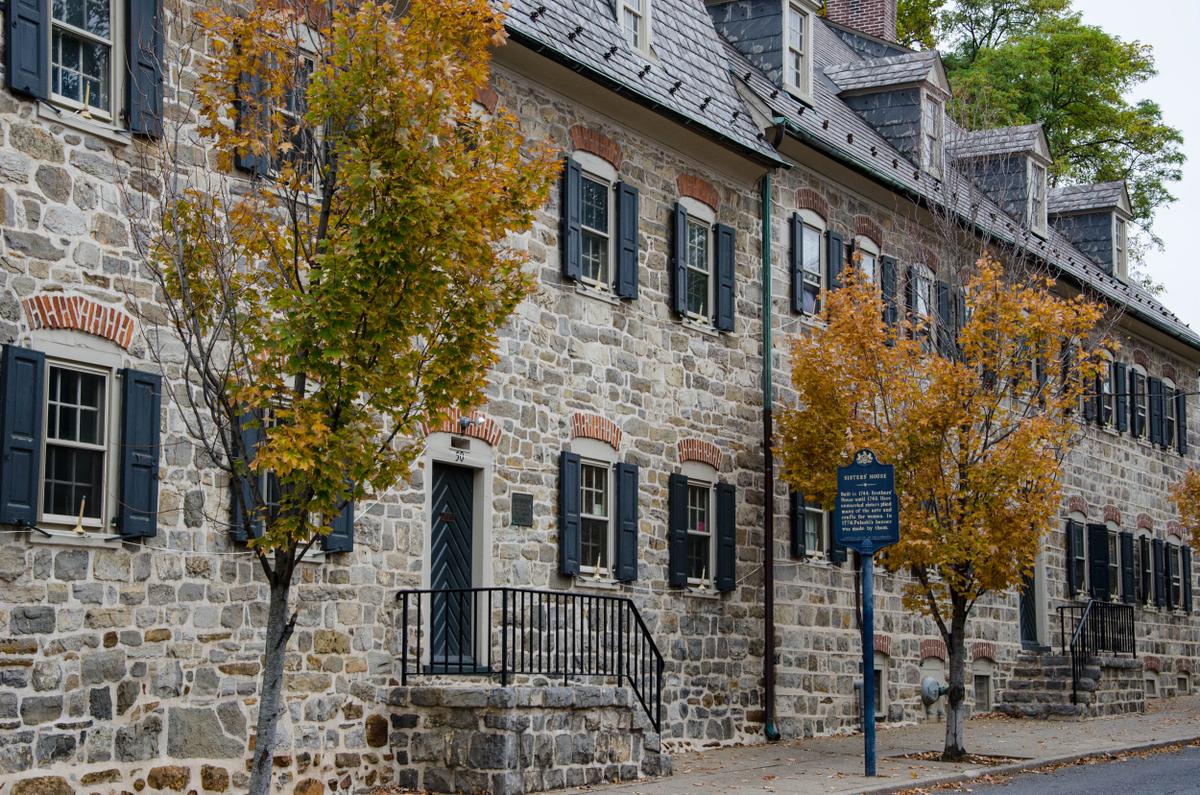
The protected site sits in the heart of downtown Bethlehem and spans roughly 10 acres. It includes nine structures, four ruins and God’s Acre, the Moravian cemetery, all within the boundaries of the already-designated Historic Moravian Bethlehem National Historic Landmark District. Among the landmarks are the 1741 Gemeinhaus, the oldest building in Bethlehem and now home to the Moravian Museum, and the 1762 Waterworks in the Colonial Industrial Quarter, recognized as the first pumped municipal water system in the American colonies.
A first-of-its-kind transnational designation
Bethlehem’s listing is unusual because it is not a standalone site. It is part of a single, transnational World Heritage property that links four Moravian settlements across four countries:
Bethlehem, Pennsylvania, in the United States
Herrnhut, Germany
Gracehill, in Northern Ireland, United Kingdom
Christiansfeld, Denmark, which was inscribed separately in 2015
In UNESCO’s records, the 2024 action was technically an extension of Christiansfeld, the Danish settlement inscribed on its own in 2015, broadened to add Bethlehem, Herrnhut and Gracehill under the shared name “Moravian Church Settlements.” According to Historic Bethlehem Museums & Sites, it nonetheless marked the first transnational, serial World Heritage nomination put forward by the United States, the result of a decades-long effort. The four settlements together were cited for their well-preserved Moravian town planning, distinctive architecture and shared values of education, equality and community life that shaped the church’s influence around the world.
Roots that reach back to 1741
The Moravians established Bethlehem in 1741 near the confluence of the Monocacy Creek and the Lehigh River. The planned community served as the religious and administrative center for the church’s activities in North America and as a base for missionary outreach. Its early buildings reflect the Moravians’ communal way of life, including dedicated houses for the Single Brethren and Single Sisters and the Gemeinhaus that anchored congregational life.
That long history of preservation is part of why the site qualified. UNESCO requires that a property meet at least one of 10 selection criteria, and the Bethlehem settlement was recognized as exceptional testimony to Moravian Church principles and as an example of innovative town planning and influential architectural style.
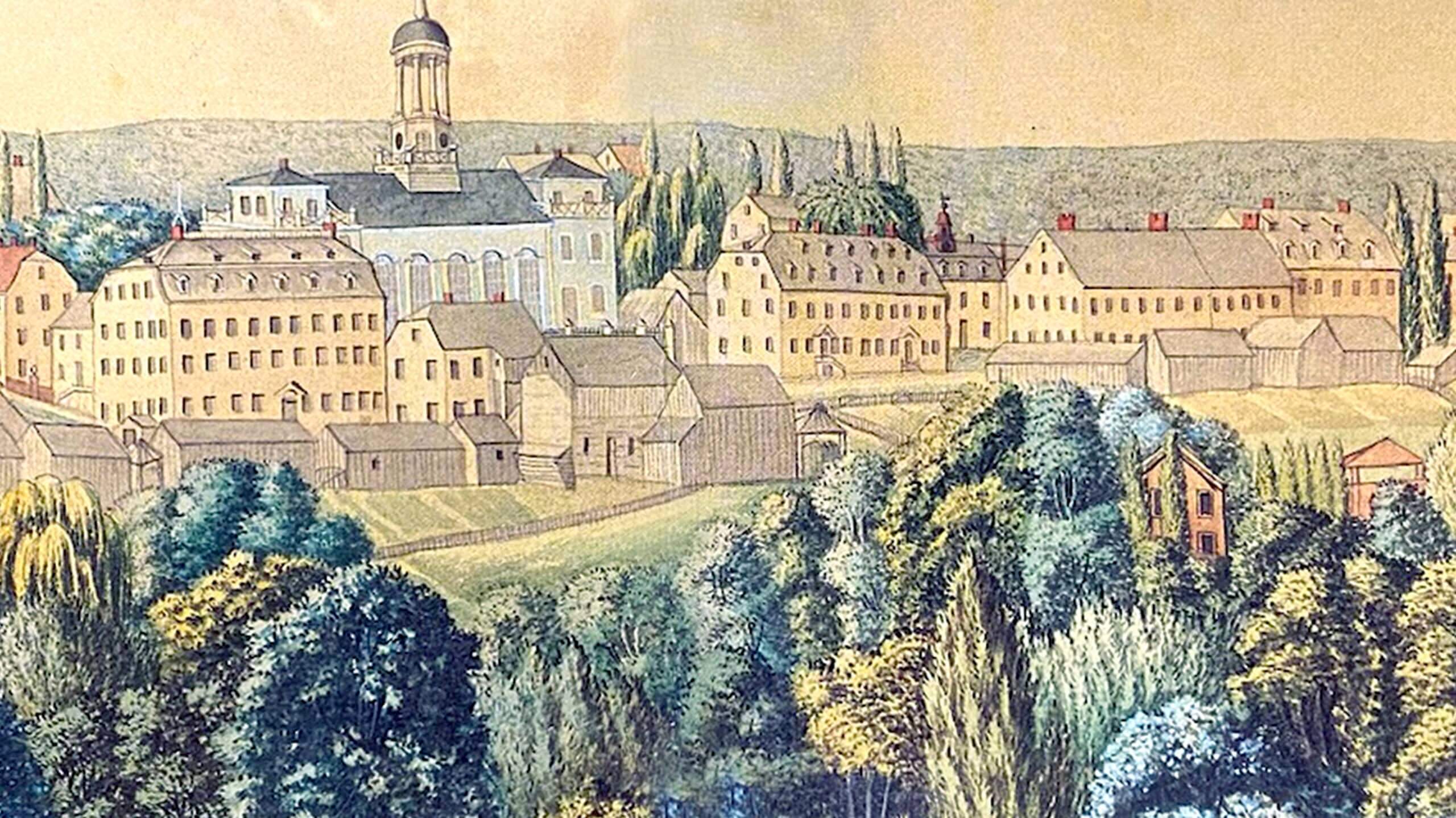
A historical view of early Moravian Bethlehem, the 18th-century settlement at the heart of the World Heritage designation.
What’s Happened Since
The inscription was only the beginning. On Oct. 17, 2024, federal and international dignitaries gathered in Bethlehem for an official ceremony formally marking the city’s place on the World Heritage List, the 26th such site in the United States.
Nearly a year later, on Sept. 6, 2025, the city threw a World Heritage Community Celebration: a block party around Central Moravian Church, City Hall, Church Street and Main Street that featured the presentation of the official World Heritage recognition plaque, live demonstrations of traditional Moravian crafts, a Moravian sugar cake baking contest, food trucks and free guided tours.
To meet the growing visitor interest, Historic Bethlehem Museums & Sites, caretaker of eight of the designated and supporting buildings, has been running a dedicated World Heritage Tour of the 10-acre core, which takes in nine historic structures, four ruins and the God’s Acre cemetery. The guided-tour program is scheduled to run through late November 2026.
The momentum has carried into 2026. Historic Bethlehem Museums & Sites, which draws roughly 65,000 visitors a year, has leaned into the designation with new programming, including a World Heritage Day of living-history demonstrations in April 2026 and an exhibit, “Working Hands: Supplying a Revolution,” that ties the city’s Moravian past to the nation’s 250th anniversary and runs through October 2026. The nonprofit has also launched a “Taking the World Stage” capital campaign built around the new global recognition.
How the designation is shaping tourism
Local leaders see the World Heritage label as a marketing asset that can draw cultural travelers from beyond the region, from New York and Philadelphia and, ideally, from overseas. The goal, officials have said, is to convert day-trippers into overnight visitors, who tend to generate a stronger economic impact.
Bethlehem Mayor J. William Reynolds has framed the recognition in global terms, saying it “places Bethlehem on the world stage as a guardian of our shared human heritage.” At the same time, he has been candid about the difficulty of forecasting the payoff, telling Lehigh Valley Business, “It’s hard to know. We don’t have anything to compare it to.” He has argued that Bethlehem holds an advantage over some other World Heritage sites because the district is surrounded by a vibrant, walkable downtown: “Those other sites are not surrounded by the level of economic vibrancy that Bethlehem has.”
Stakeholders, including the city, Historic Bethlehem Museums & Sites and Discover Lehigh Valley, are working on a five- to 15-year plan to build a multi-day visitor experience and to connect the World Heritage Site with other attractions across the Lehigh Valley. The broader pitch positions Bethlehem as a model of post-industrial revival, pairing its colonial Moravian past with the more recent transformation of the former Bethlehem Steel works into an arts and entertainment district.
What it means for downtown and the Historic Moravian District
For the Historic Moravian District, the designation brings both opportunity and responsibility. World Heritage status carries an expectation of careful stewardship and conservation, and managing increased foot traffic without eroding the historic fabric is a recurring challenge at heritage sites worldwide.
For now, much of the visible activity is promotional and interpretive: signage, guided tours and programming that explain the site’s significance to a wider audience. Discover Lehigh Valley, the region’s tourism agency, continues to fold the World Heritage story into how it markets the area to travelers. The longer-term economic impact will take years to measure, but the immediate effect is clear, Bethlehem now carries a designation shared by fewer than two dozen other places in the country.
Bethlehem’s UNESCO Designation at a Glance
Inscribed on the UNESCO World Heritage List on July 26, 2024, at the committee meeting in New Delhi; celebrated locally on Oct. 17, 2024.
One of only 26 World Heritage sites in the United States, and the third in Pennsylvania.
Part of a transnational property linking Bethlehem with Herrnhut (Germany), Gracehill (Northern Ireland/UK) and Christiansfeld (Denmark).
The U.S.’s first transnational, serial World Heritage nomination, the product of a decades-long effort.
The protected area spans about 10 acres with nine structures, four ruins and God’s Acre cemetery within the Historic Moravian Bethlehem National Historic Landmark District.
Anchored by the 1741 Gemeinhaus and the 1762 Waterworks; the settlement was founded by Moravians in 1741.
Officials are developing a five- to 15-year tourism plan aimed at overnight visitors and connecting the site to attractions across the Lehigh Valley.