When Chef Lee Chizmar and Erin Shea decided to open a ramen bar inside the Easton Public Market, some people thought it was a strange move. Chizmar had a James Beard nominated fine dining restaurant. Why pivot to noodle soup?
Anyone who has eaten a bowl at Mister Lee's Noodles understands immediately.
Ramen, But Make It Local
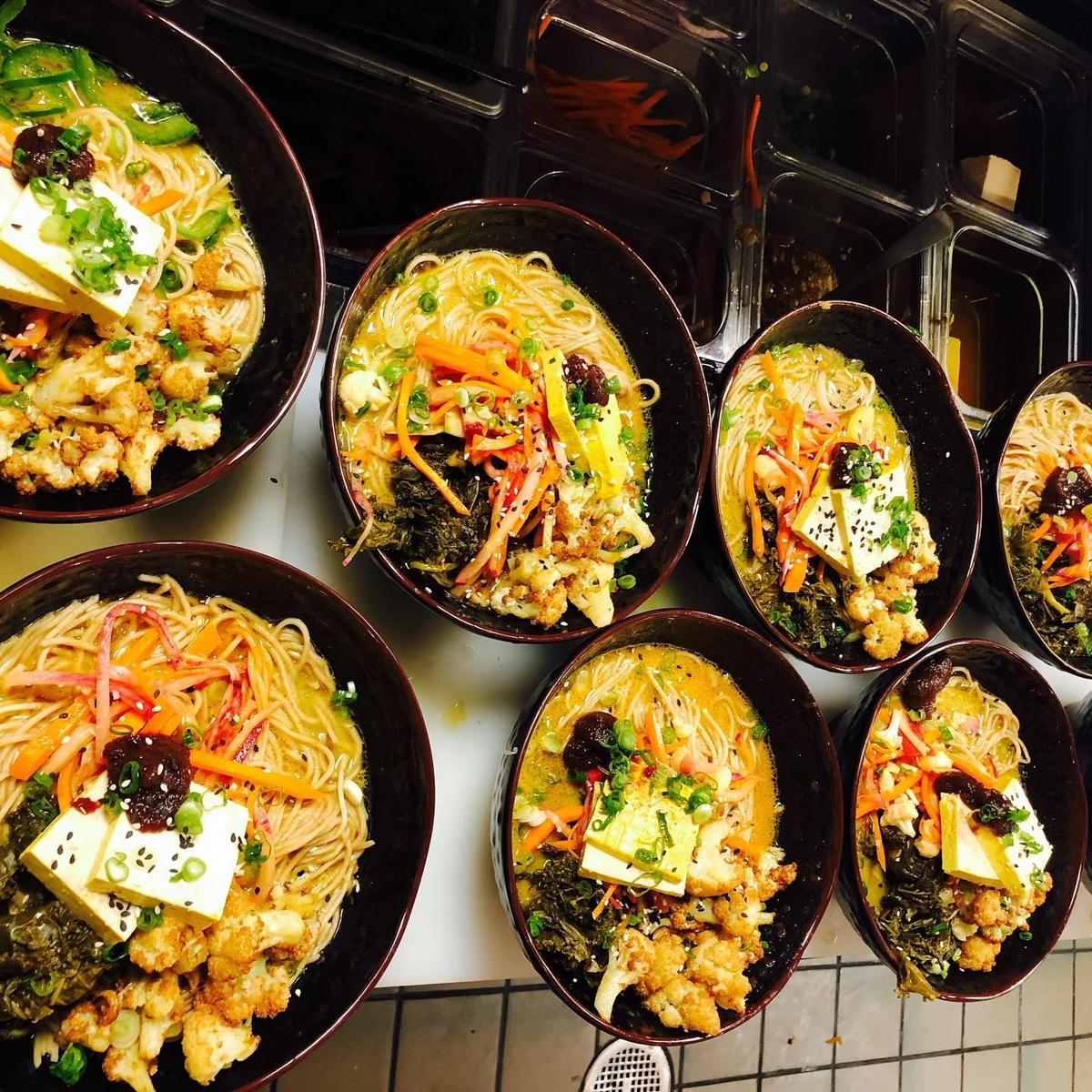
Mister Lee's isn't a typical ramen joint. The broth isn't made from a packet or shipped in from a supplier. It's built in house using bones and ingredients sourced from the same network of Lehigh Valley farms that supply Bolete. Scholl's Family Farm provides the pork. Salvaterra's brings the mushrooms. Primordia grows the specialty greens. Liberty Gardens and Spring Run fill in the rest.
The result is ramen that tastes like no other ramen you've had. The broth is deep and complex, simmered for hours until every bit of flavor has been extracted. The noodles have the right chew. The toppings are arranged with the care of a fine dining plate: chashu pork that melts on your tongue, 60 minute eggs with perfectly jammy centers, house made sriracha, togarashi, and miso that add layers of heat and umami.
The Easton Public Market
The original Mister Lee's sits inside the Easton Public Market, a community food hall that has become one of downtown Easton's anchors. The market's open layout means you can watch the kitchen work while you wait for your bowl. The energy is casual and communal, which is exactly right for ramen.
The location was strategic. The Easton Public Market draws a steady stream of food lovers, and Mister Lee's became an immediate draw. On cold days, the line stretches through the market as people wait for a steaming bowl. On warm days, they wait anyway, because the ramen is that good.
The Second Location
Success in Easton led to a second Mister Lee's on 3rd Street in Bethlehem's SouthSide, expanding the reach of Chizmar's farm to table ramen concept. The Bethlehem location has its own personality: a cozy, intimate space that feels like a neighborhood noodle shop in Tokyo, except the ingredients came from farms down the road.
Both locations serve the same core menu but rotate specials based on what's in season. A spring bowl might feature ramps and fresh peas. A winter bowl could include root vegetables and heartier greens. The menu is never exactly the same twice, which keeps regulars coming back to see what's new.
Why It Works
The genius of Mister Lee's is that it applies fine dining principles to an accessible format. You don't need a reservation. You don't need to dress up. You don't need to spend eighty dollars. You just need twelve to fifteen bucks and a healthy appetite.
But the food is made with the same rigor and sourcing standards that earned Bolete its James Beard nominations. Every ingredient is intentional. Every component of the bowl has been thought through. The difference is that it arrives in a paper bowl instead of on a white plate, and you eat it with chopsticks instead of a fork.
The Bigger Picture
Mister Lee's is part of a broader shift in the Lehigh Valley food scene. Chefs who could work anywhere are choosing to work here, and they're creating food that rivals what you'd find in Philadelphia or New York at a fraction of the price. The fact that you can eat world class ramen made with local farm ingredients in a small Pennsylvania city is remarkable.
It's also very Lehigh Valley: unpretentious, quality driven, and connected to the land. Mister Lee's doesn't need a fancy dining room or a celebrity endorsement. It just needs great noodles, great broth, and a kitchen that cares. It has all three.