A proposal to revive a long-dormant “wealth tax” in Lehigh County drew more than 120 people to a heated June hearing, pitting arguments about inequality against warnings of an unconstitutional overreach, before fizzling without a vote. Here's what the plan would have done, and why it stalled.
The idea, floated in early May by Lehigh County Controller Mark Pinsley, would resurrect Pennsylvania's intangible personal property tax, a levy on certain investments that the county last collected in the 1990s before abandoning it amid legal challenges. Supporters framed it as a way to make the wealthiest residents pay their share as the county stares down growing deficits. Opponents called it legally doomed and economically reckless.
What the “Wealth Tax” Actually Is
Despite the nickname, the proposal is not a tax on overall net worth. It is a 0.4% flat tax, 4 mills under Pennsylvania's 1913 statute, on intangible personal property, meaning passive financial assets such as:
Stocks, bonds, mutual funds, and ETFs
Brokerage and other investment accounts
Partnership ownership interests and second homes
It would not apply to primary residences, vehicles, checking accounts, retirement accounts like 401(k)s and IRAs, or owner-operated family farms. Pinsley also proposed exempting the first $200,000 of an individual's assets, which he said would shield most small businesses and lower earners.
By the controller's estimate, the tax would raise about $25.5 million a year, with roughly 91%, around $23.3 million, coming from households holding more than $200,000 in taxable assets.
Why It Was Proposed
Pinsley pitched the tax as an answer to a worsening budget squeeze. The county faces a $3.7 million structural deficit in 2026, projected to grow to $5.5 million in 2027, and has drawn down reserves in four of the past five years, a pattern officials warn will eventually drain its stabilization fund.
Backers note that the county's property tax rate is actually lower than it was 13 years ago, even as the population has grown by about 25,000 and inflation has climbed 43%. Property taxes bring in roughly $114 million a year toward a total county budget of $558.8 million, with much of the rest being state and federal pass-through funding.
“We're sure as [expletive] not cutting our way out of this crisis,” County Executive Josh Siegel said.
The Case For
Proponents cast the tax as a matter of fairness. “The goal is to raise money. It's not to hurt anybody. It is to help the majority,” Pinsley said. Siegel was blunter: “I think in this country we should tax billionaires. We should tax the wealthy more.”
Steve Herzenberg, an economist with the Keystone Research Center, told the hearing that “given the extreme concentration of financial wealth, a flat intangible wealth tax would fall overwhelmingly on a tiny fraction of the wealthiest taxpayers,” and suggested that pairing it with a property tax cut could leave most residents better off. Finance Committee Chair Sarah Fevig framed the debate as “a conversation about how we want to fund our government.”
The Case Against
Critics attacked the plan on both legal and economic grounds. Commissioner Ron Beitler argued it would hit ordinary people, not just the rich: “This is a tax on the savings assets and small business resources of everyday working Americans.”
Asher Schiavone of the Greater Lehigh Valley Realtors said the county had the wrong diagnosis. “Overspending by $3 million sounds like an expense problem, not a revenue problem,” he said, warning that “this tax will make housing less affordable” and could push out local landlords in favor of institutional investors. Commissioners Geoff Brace, Dan Hartzell, and Antonio Pineda also opposed the proposal, with Pineda recalling the lawsuits that dogged the tax in the early 1990s. Beitler noted the county collected only about $2.5 million from the tax before ending it in 1992.
A Constitutional Long Shot
The biggest hurdle may be the Pennsylvania Constitution's Uniformity Clause, which requires taxes to be applied equally to everything they cover, the same reason the state has no graduated income tax. That raises doubts about whether Pinsley's $200,000 threshold could survive a court challenge. When the county levied the tax decades ago, the Pennsylvania Supreme Court struck down provisions that treated out-of-state company stocks differently from in-state ones.
Beitler was openly skeptical it could clear those bars: “If this surviving a legal challenge on just the broad aspect of it is a Hail Mary, then trying to thread the needle of the threshold plan? I don't know, it's akin to a perfect game in baseball. I don't see it happening.”
Where It Stands Now
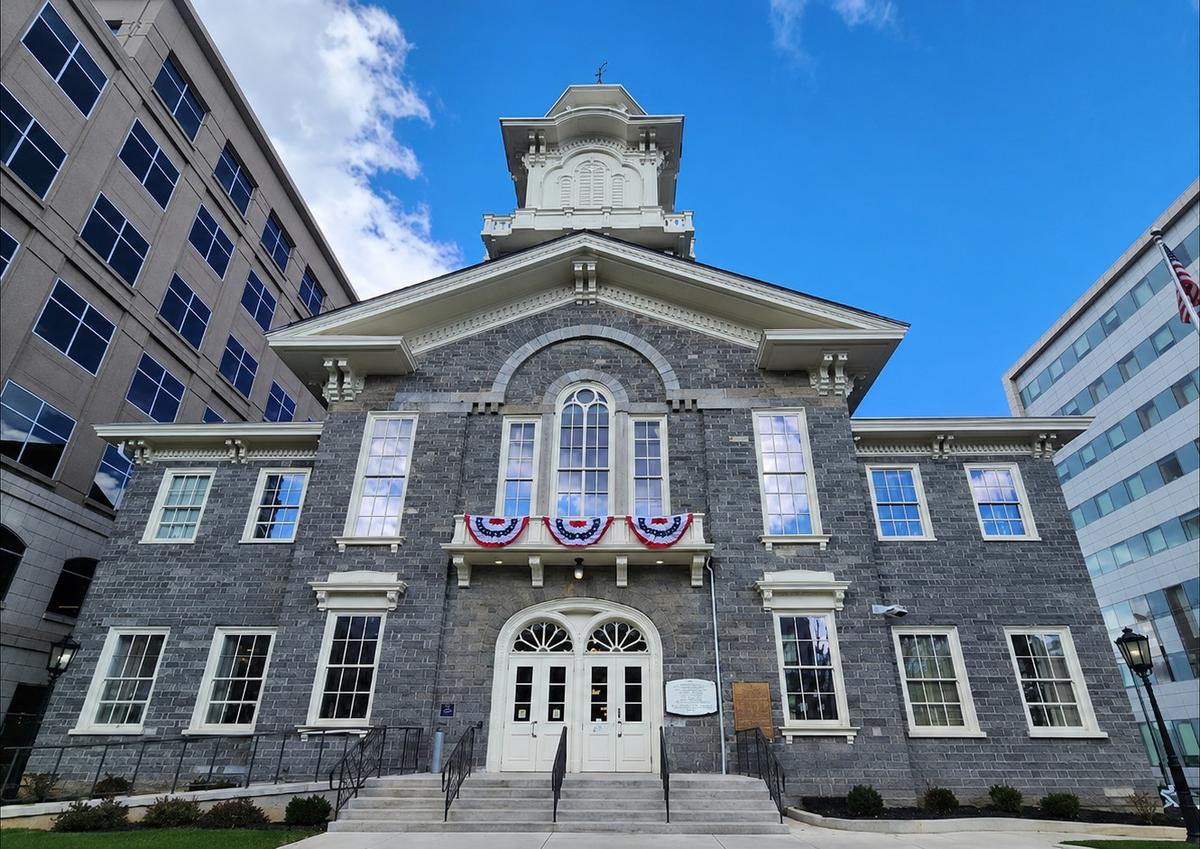
The June 17 hearing at the Historic Lehigh County Courthouse drew more than 120 people in person and about 60 more online, with the clear majority opposed. The finance committee took no vote. Siegel has said he will not include the intangible personal property tax in his 2027 budget proposal, and no commissioner has signaled any intention of formally proposing it by year's end.
For now, the “wealth tax” remains exactly what it was when Pinsley floated it: an idea on the table, one that sparked an unusually fierce local debate about who should pay to keep the county running, even if it goes no further.
The Lehigh County “Wealth Tax” at a Glance
What it is: A revived intangible personal property tax, 0.4% (4 mills) on investments like stocks, bonds, and second homes
Exempt: Primary homes, vehicles, checking and retirement accounts, family farms; plus the first $200,000 of assets
Revenue: ~$25.5 million/year, about 91% from households with $200,000+ in taxable assets
Why: County deficits of $3.7M (2026) and $5.5M (2027) and dwindling reserves
Proposed by: County Controller Mark Pinsley; backed by County Executive Josh Siegel
Main obstacle: Pennsylvania's Uniformity Clause and a history of 1990s legal challenges
Status: No vote after the June 17 hearing; not in the 2027 budget, effectively shelved for now