
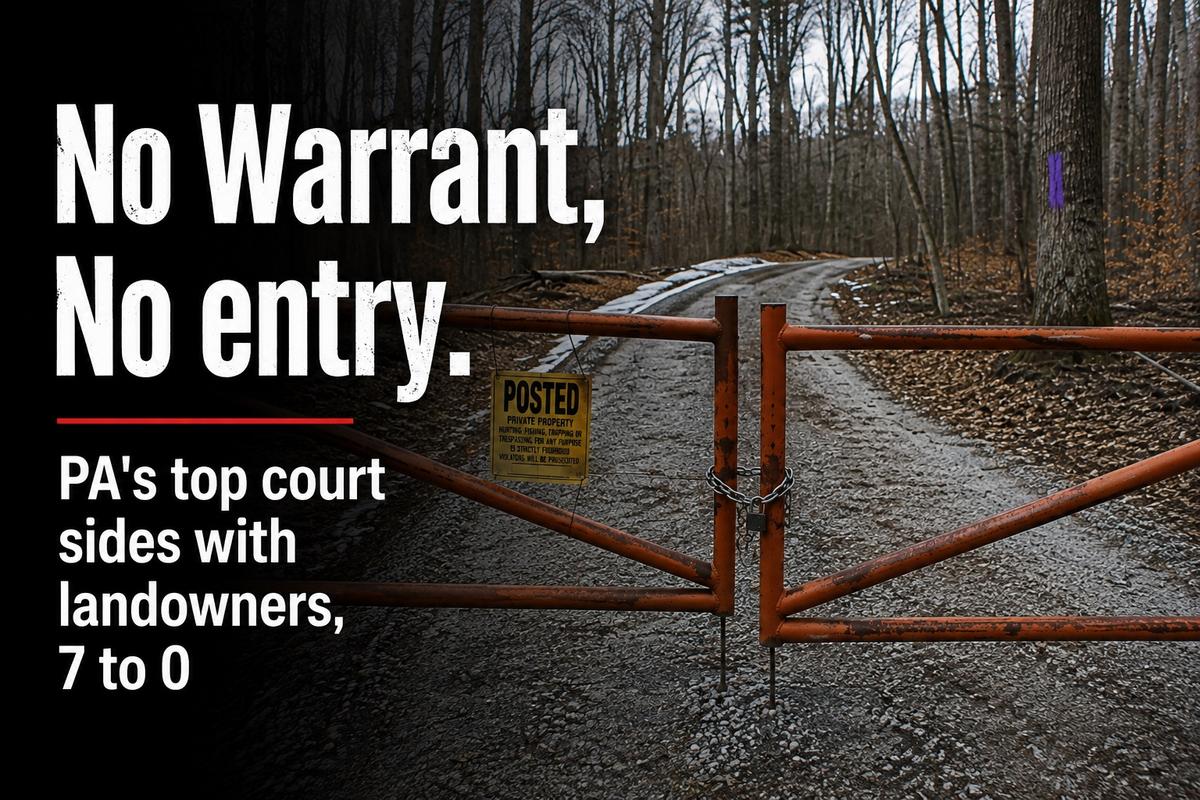
For as long as anyone can remember, a Pennsylvania game warden could walk onto your woodlot without a warrant, without your consent, and without telling you. On July 21, the state Supreme Court ended that, unanimously. If you own land in Lehigh or Northampton County and you have posted it properly, state officers now generally need a warrant signed by a judge before they set foot on it.
The catch is in those last four words. The protection is not automatic, and it turns on something you control.
What the Court Decided
The case is Punxsutawney Hunting Club, Inc. v. Pennsylvania Game Commission, decided 7 to 0 on July 21, 2026, with Justice Kevin Brobson writing for the court.
At issue was the “open fields doctrine,” a rule from federal Fourth Amendment law holding that the constitution protects your home and the area immediately around it, but not the fields and woods beyond. Under that doctrine, wildlife officers across the country have long entered private land at will.
Pennsylvania’s justices decided the state constitution is stronger than the federal one on this point. Article I, Section 8 protects citizens against unreasonable searches of their “possessions,” and the court held that word does real work. It ruled that Article I, Section 8 “provides Pennsylvania citizens with greater protection than the Fourth Amendment to the United States Constitution as it relates to the open fields of any landowner that has demonstrated a reasonable expectation of privacy by taking sufficient steps.”
Where a landowner has taken those steps, Brobson wrote, officers “must obtain a warrant based upon probable cause or satisfy one of the recognized exceptions to the warrant requirement before entering such property.”
The Case: 78 Days of Trail Camera Footage
Two hunting clubs brought the challenge, both founded in 1919 in the Allegheny Mountains. Punxsutawney Hunting Club owns 4,400 acres. Pitch Pine Hunting Club owns 1,100 acres immediately to its south.
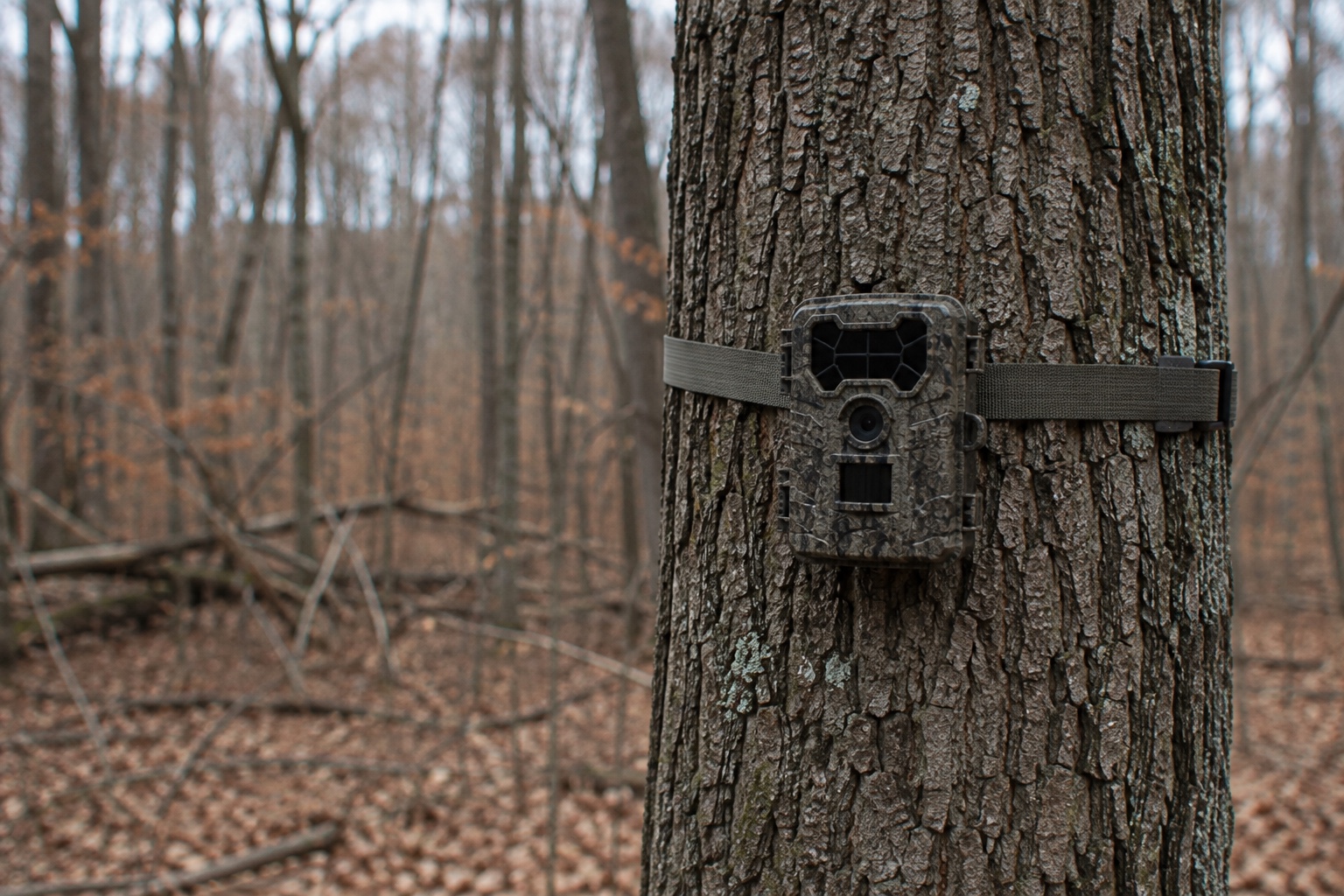
It started in the summer of 2013, when a wildlife officer accused a Pitch Pine member of illegally feeding bears outside a cabin. What the litigation eventually turned up was a pattern. Game Commission officers entered the clubs’ land without a warrant, consent or probable cause somewhere between 15 and 22 times. In one instance, Warden Mark Gritzer mounted a trail camera on Punxsutawney’s property and left it there for 78 days, hoping to build probable cause for an illegal elk feeding charge.
The clubs had fenced their land, posted signs, applied purple paint and locked their gates. They argued that if all of that did not create an expectation of privacy, nothing would. The court agreed. The clubs were represented by the Institute for Justice, and the ruling puts Pennsylvania alongside Tennessee and Vermont, whose courts have reached similar conclusions under their own constitutions.
The Catch: You Have to Post Your Land
Read the holding closely and the limit is right there. The protection attaches to land whose owner “has demonstrated a reasonable expectation of privacy by taking sufficient steps” to exclude intruders.
Unmarked acreage is a different question. A back forty with no signs, no paint, no fence and no gate has not sent anyone a message, and this ruling does not obviously cover it. For Valley landowners the practical takeaway is blunt: the constitutional protection announced in July is one you have to claim by marking your boundaries.
How to Post Land in Pennsylvania
Signs work. So does purple paint, and paint does not blow down in a storm or get torn off a tree.
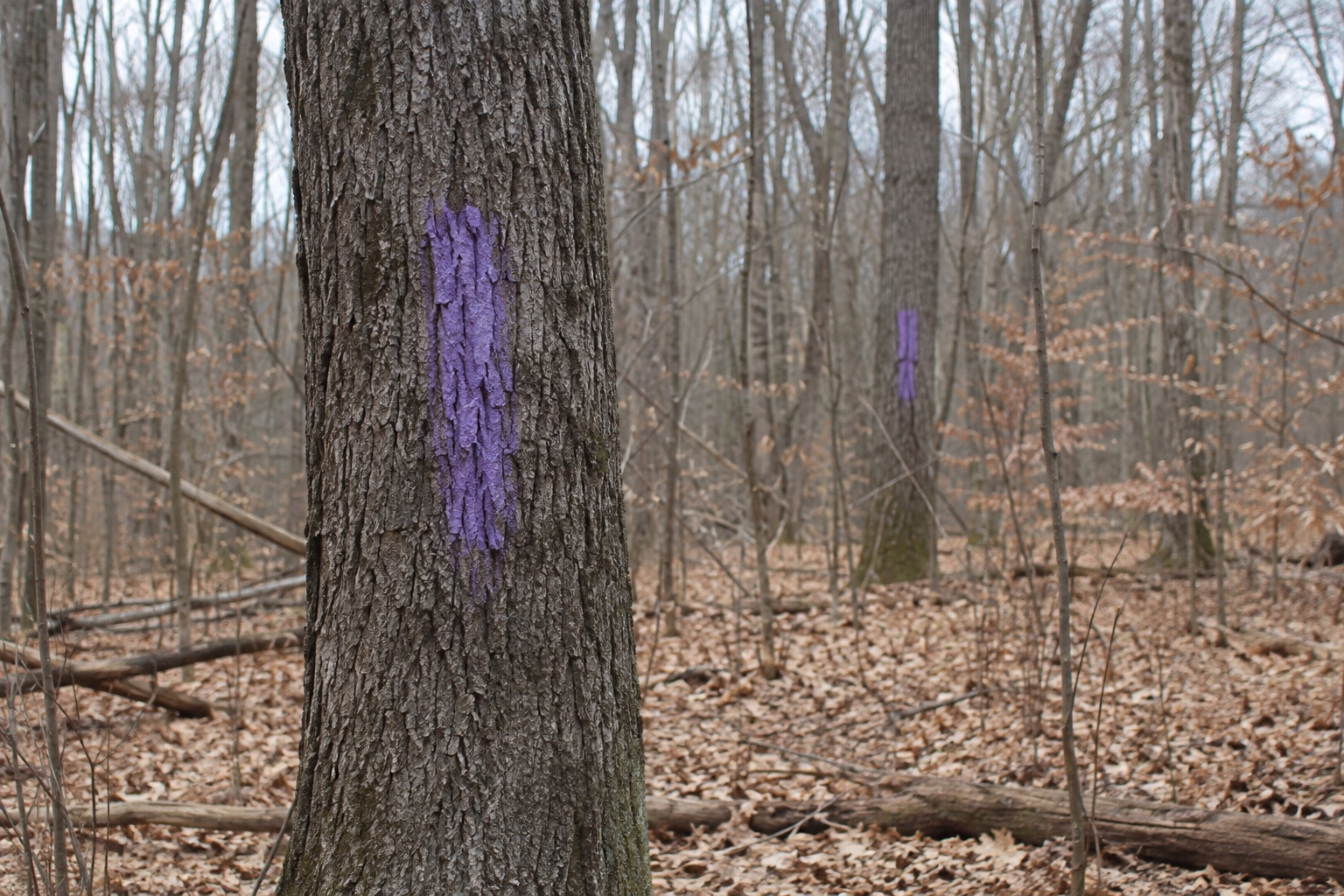
Under 2019 Act 103, which amended the Crimes Code and took effect in 2020, Pennsylvania landowners may post property with purple paint instead of signs. The rules are specific:
- Vertical purple lines at least 8 inches long and 1 inch wide
- The bottom of each mark between 3 and 5 feet off the ground
- Marks no more than 100 feet apart along the boundary
The law applies in every county except Philadelphia and Allegheny, so it is fully in effect across Lehigh and Northampton counties. A proper purple mark carries the same legal weight as a posted sign. Ignoring one is defiant trespass, a third-degree misdemeanor carrying up to a year in jail and a $2,500 fine.
One wrinkle worth knowing if you hunt: the same law lets an unarmed person cross posted land for the sole purpose of retrieving a hunting dog.
What It Does Not Change
The ruling is narrower than some of the celebration around it suggests.
It does not make private land a place where wildlife law stops applying. Officers can still get a warrant, and the court preserved the recognized exceptions to the warrant requirement, which cover circumstances like an emergency or a suspect in flight. It does not touch state game lands, where the Game Commission manages more than 1.5 million acres of public hunting ground. It does not affect the Hunter Access Program, under which private owners voluntarily open land to public hunting. And it does nothing for anyone who is actually poaching, beyond requiring the officer to do the paperwork first.
What it changes is the default. For decades the assumption was that a warden could walk in. As of July 21, on land you have clearly marked as yours, the assumption runs the other way.
At a Glance
- The Pennsylvania Supreme Court ruled 7 to 0 on July 21, 2026 in Punxsutawney Hunting Club v. Pennsylvania Game Commission that state officers generally need a warrant to enter posted private land.
- The decision rejects the federal “open fields doctrine” and rests on Article I, Section 8 of the Pennsylvania Constitution, which the court read as broader than the Fourth Amendment.
- Game wardens had entered the two clubs’ land 15 to 22 times without warrants, once leaving a trail camera in place for 78 days.
- Protection applies to owners who have taken “sufficient steps” to exclude intruders, such as signs, fencing, locked gates or purple paint.
- Pennsylvania’s purple paint law requires vertical marks 8 inches long and 1 inch wide, 3 to 5 feet off the ground, no more than 100 feet apart. It applies in Lehigh and Northampton counties.
- Warrant exceptions, state game lands and the Hunter Access Program are unaffected.