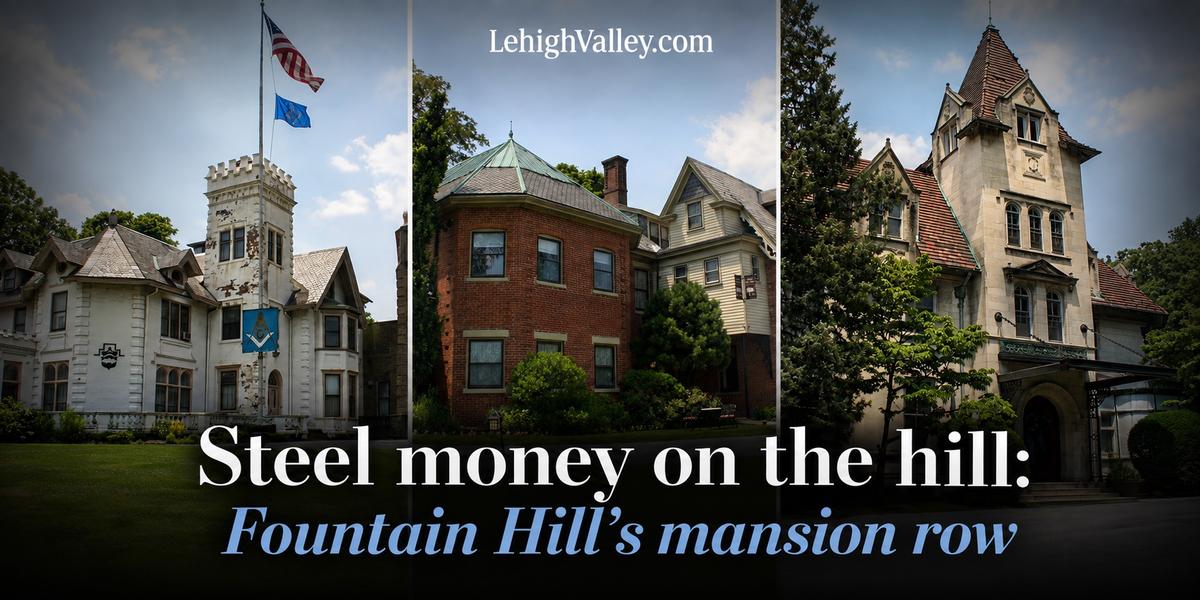
There is a stretch of West Third Street where the houses stop being houses and start being statements. Turrets. Cut granite. Slate roofs with copper cresting. Carriage entrances built for carriages. It runs west out of Bethlehem, crosses a line you cannot see, and keeps going into a borough three-quarters of a square mile in size. This is Fountain Hill, and for about fifty years it held more concentrated wealth than anywhere else in the Lehigh Valley.
Almost none of it started as money. It started as a Moravian farm.
Six owners in a hundred and fifty years
The land below the Lehigh River was cut into farms in the 18th century, the Luckenbach, Jacobi, Crown Inn, Fuerer and Hoffert tracts. The Moravians of Bethlehem bought most of it over 32 years beginning in 1743, and by 1775 they owned all but 40 acres of what is now Fountain Hill. The Hoffert family worked one of those farms from around 1810, long enough that the ground took their name.
Then it changed hands fast. Charles C. Tombler, the first shoe dealer in Bethlehem, bought the Hoffert farm in 1848. Charles Augustus Fiot, a retired music dealer born in France, took 107 acres of it for a summer place, filled it with fountains and imported trees, and called the estate Fountainbleau after his birthplace. Philadelphia investors laid out building lots nearby in 1854. When Fiot died in 1866, Tinsley Jeter bought the estate and the unsold Moravian lots around it and gave the whole development the name it still carries.
Jeter is remembered as the father of Fountain Hill, but he sold too. In 1876 Asa Packer, the Lehigh Valley Railroad magnate who founded Lehigh University, bought the Fountainbleau tract and handed it to the board of St. Luke's Hospital as a gift. The hospital had opened in March 1872 and admitted its first patient in 1873. Before it existed, the nearest hospital to Bethlehem was more than 50 miles away in Philadelphia.
That is the whole chain in one paragraph: Moravian farm, Hoffert, Tombler, Fiot, Jeter, Packer, hospital. Six owners, a century and a half, and not one of them a steel man yet.
The railroad came first
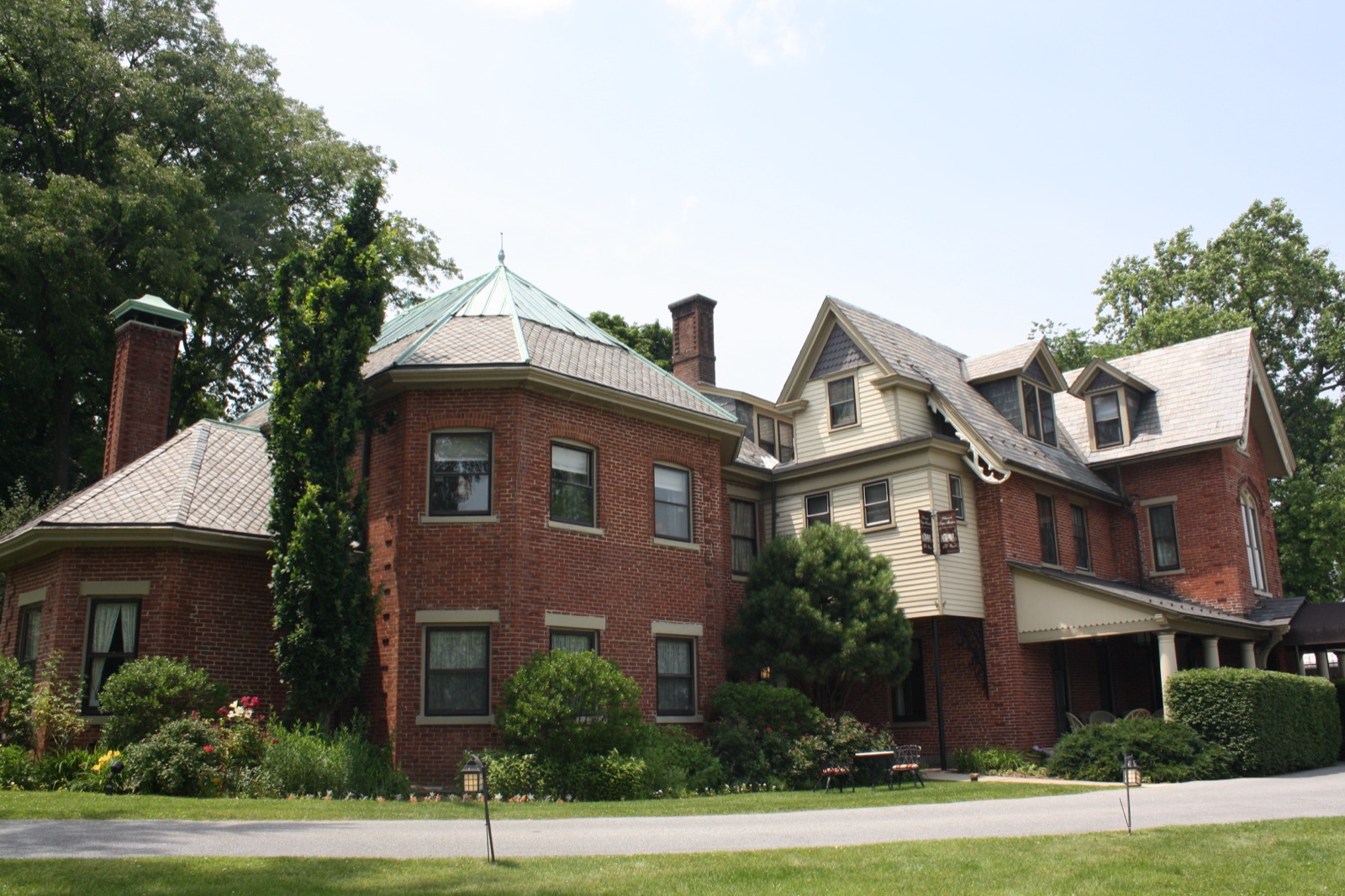
Before Bethlehem Steel there was the Lehigh Valley Railroad, and its officers built on the hill first. Robert H. Sayre, appointed chief engineer of the railroad by Packer himself, put up his house in 1858. It is still standing, still handsome, and operating today as an inn.
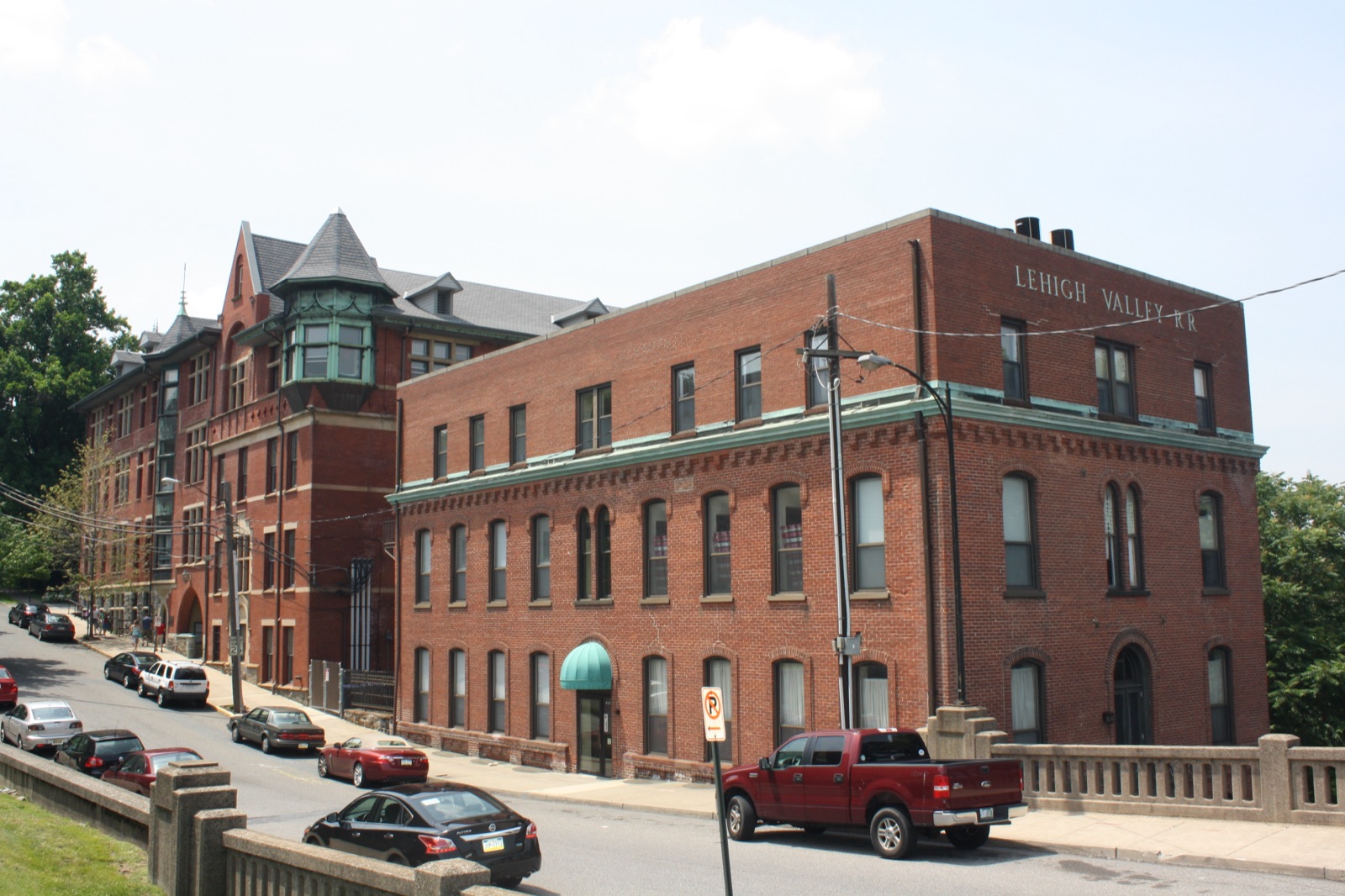
Elisha Packer Wilbur, Asa Packer's nephew and eventually president of the railroad, built his own mansion around 1863. The Wilbur name went onto a trust company, and the trust building still stands beside the old Lehigh Valley Railroad headquarters, the company's name cut into the brick under the cornice.
Then the steel men bought in
Garrett B. Linderman, general manager of the Bethlehem Iron Company, built the biggest house on the hill in 1870, a three-story pile of cut granite at 557 West Third Street, Chateauesque with an iron canopy over the front door. He lived in it until his death in 1885.
In 1903 Charles Schwab arrived in Bethlehem to turn that iron company into the Bethlehem Steel Corporation, and he bought Linderman's house. He hired the architect A. W. Leh and spent $500,000 modernizing it, adding a glass-domed conservatory with stamped copper moldings and a large bay window. The house had 27 rooms. Schwab called it "the little house."
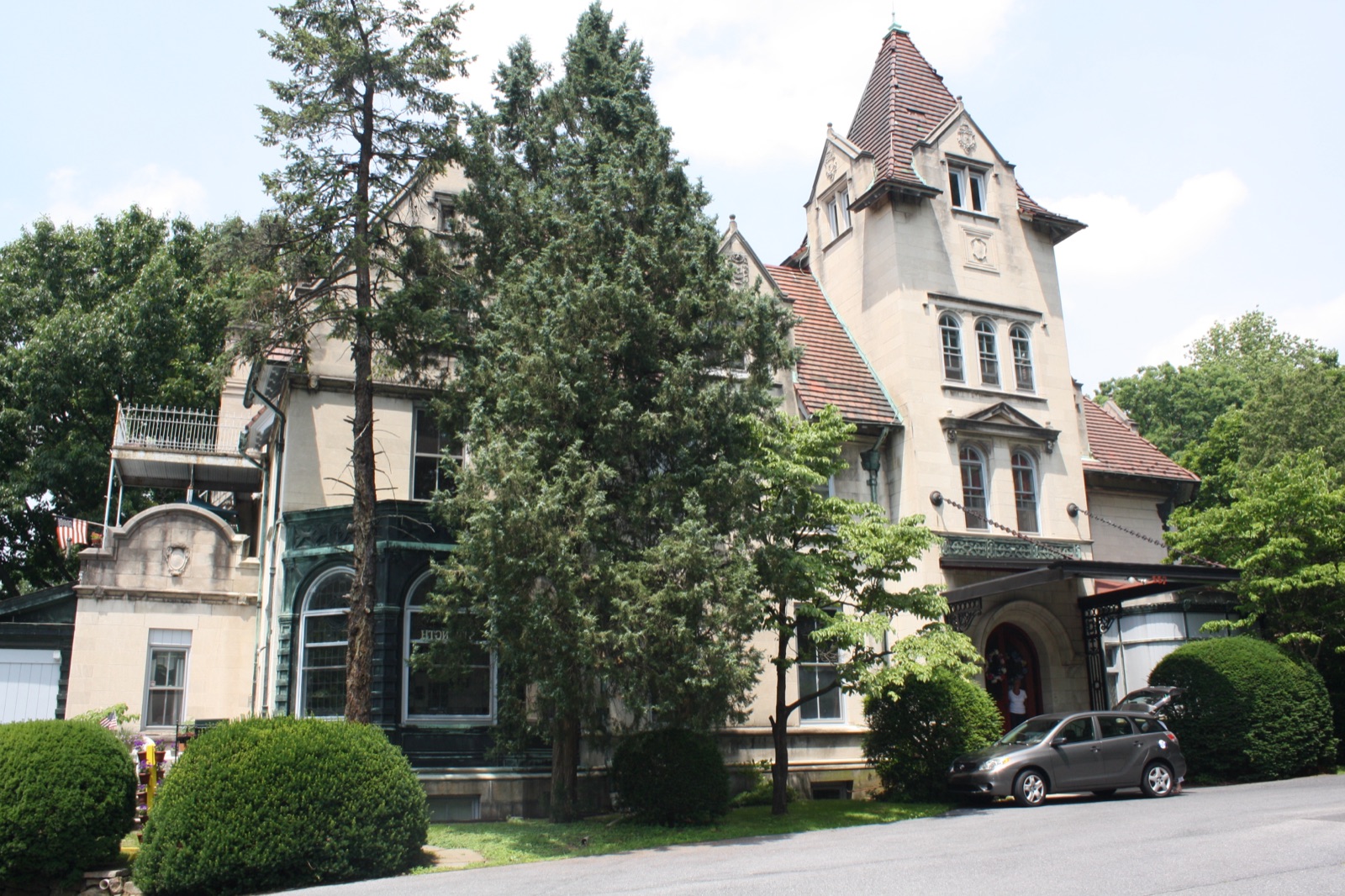
It is apartments now. That sentence does more work than anything else in this article.
The house that is not a mansion
Halfway along, the grandeur breaks. There is a pair of plain two-story brick twins with bracketed porches and sawn wooden railings, the kind of building that went up by the hundred all over the South Side. A blue state historical marker stands on the sidewalk in front of the left one.
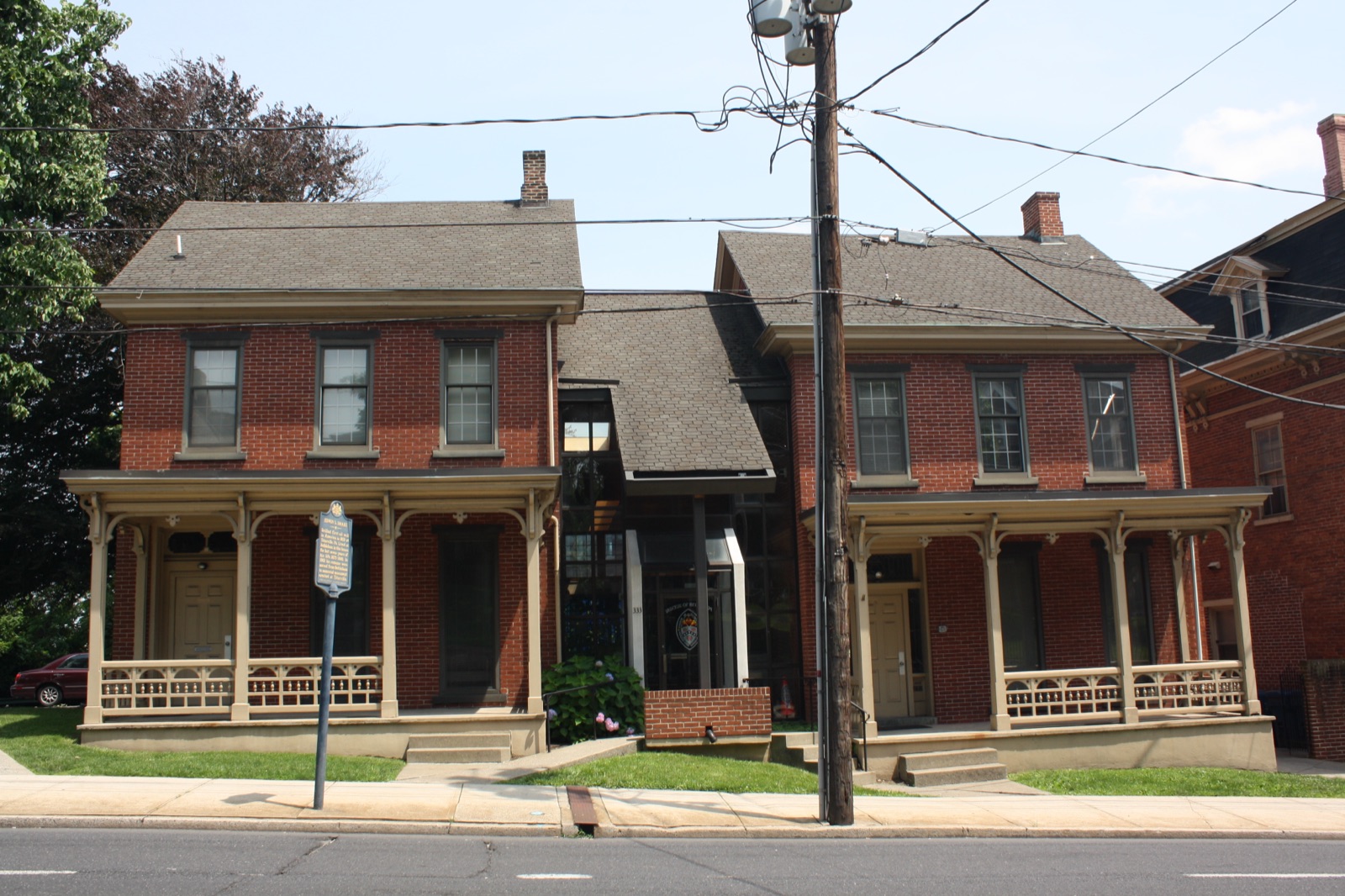
Edwin Drake drilled the first oil well in the United States at Titusville in 1859 and effectively started the American petroleum industry. He did not keep the money. He lived in this house from 1873 until his death on November 8, 1880, seven years on a hill where his neighbors were building conservatories. The richest street in the Lehigh Valley has, sitting right in the middle of it, the modest home of the man who invented an industry and got nothing lasting out of it.
Managers and merchants lived here too
The mansions get the attention, but the National Register nomination for the district is careful to note what else is there: smaller but still stylish houses built for managers and merchants. They are the reason the neighborhood reads as a neighborhood and not a row of monuments.
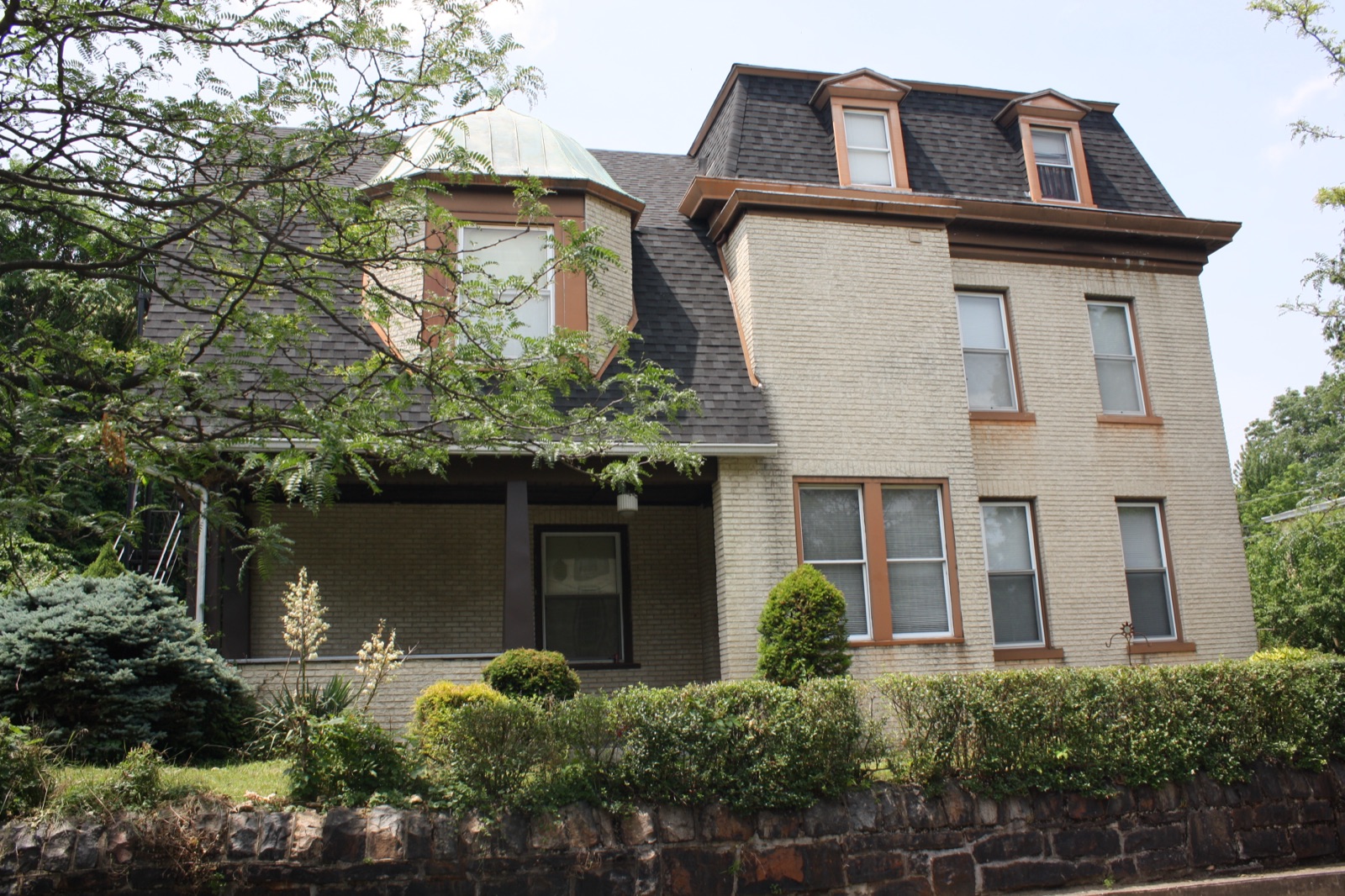
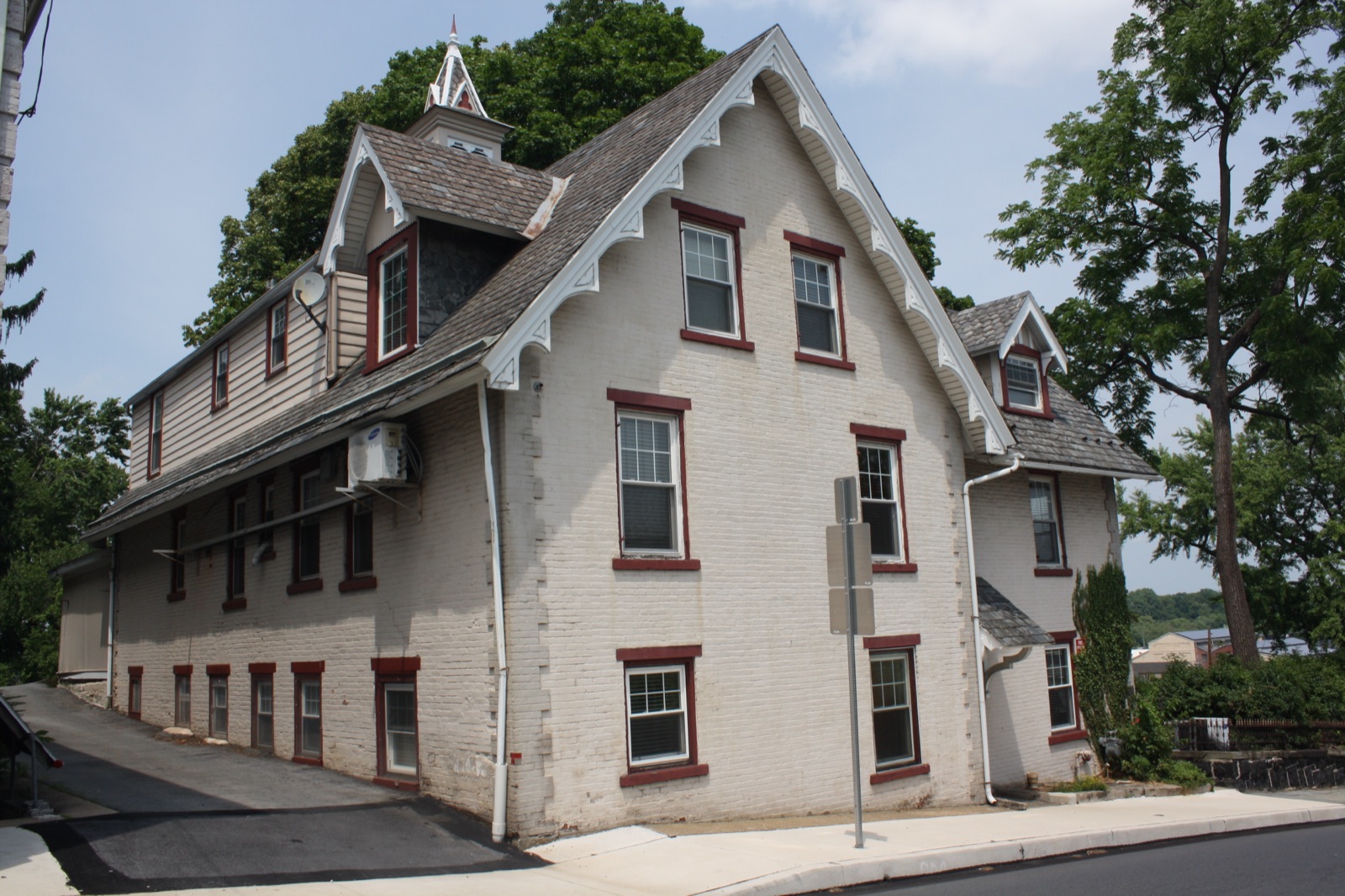
The district's 46 or so contributing buildings were put up between 1857 and 1925, and the heaviest building came in the 1880s and 1890s along Delaware Avenue, West Fourth Street and Wyandotte. Churches and institutions went up alongside the houses, including the Cathedral Church of the Nativity around 1866.
Two Sayre houses, two endings
If you want to understand what happened to the hill, look at what happened to one family's real estate.
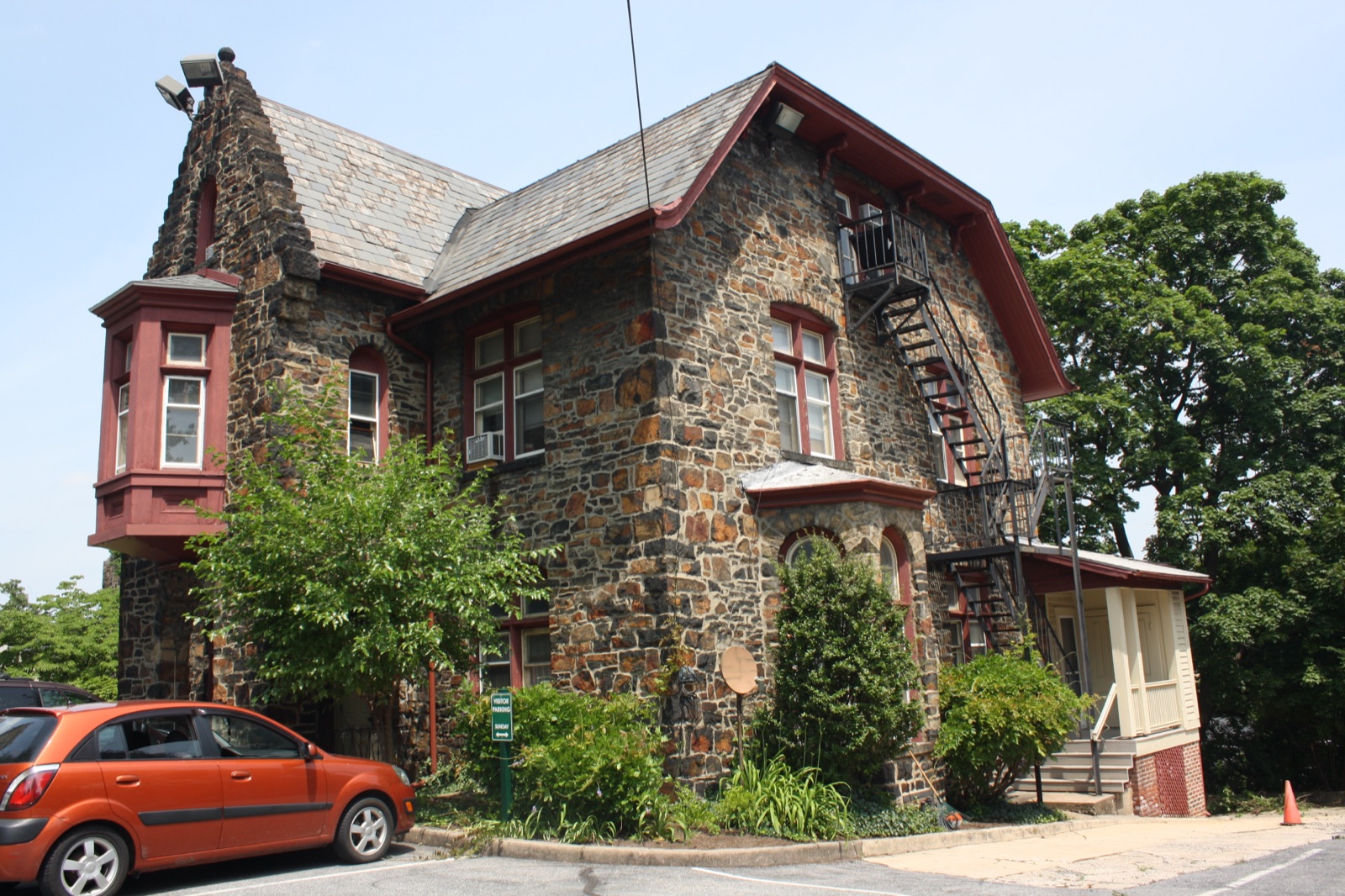
Robert Sayre's 1858 house was restored and runs as an inn, gardens kept, copper intact, lamps along the drive. Another Sayre house on the same hill did not get that ending. Ivy is climbing into the brick. The pavement in front has weeds coming through it. A steel fire escape is bolted across the entire front elevation, which is what happens when a single-family mansion gets cut into units and the code catches up with it. There is a notice posted by the front door.
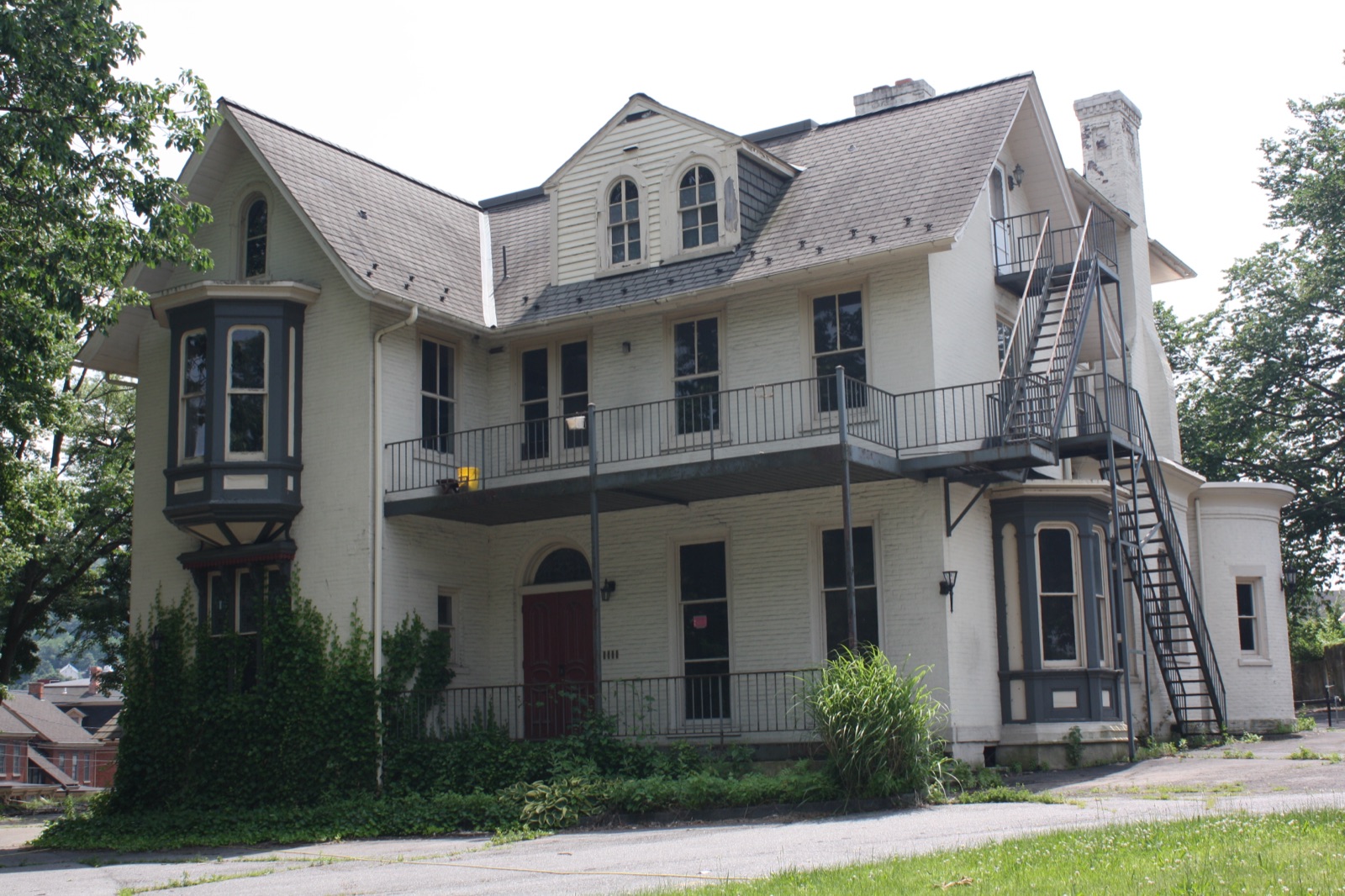
Both outcomes are common here and both are instructive if you are thinking about buying into this kind of housing stock. A 19th century mansion is only ever one of two things: a restoration that somebody funded, or a building slowly being consumed by the cost of not restoring it. There is very little in between, and the deciding factor is almost never the architecture. It is whether the building found a use that pays for its roof.
One more thing about the line
Here is the detail that trips up almost everyone who writes about this neighborhood. The Fountain Hill Historic District, the one on the National Register, lies entirely inside the City of Bethlehem in Northampton County. It is named for Fountain Hill and it mostly excludes the actual borough of Fountain Hill, which sits across the county line in Lehigh County.
The mansions do not care about the line. They run continuously west out of Bethlehem and straight on into the borough. But the paperwork cares a great deal, and so does anyone checking what municipality, what school district, and what tax rate a given house falls under. On this hill, two houses that look like siblings can sit in different counties.
What is now the borough was Salisbury Township ground until the residents petitioned the Lehigh County Court in September 1893 and incorporated that November with 212.342 acres. They came back for another 255.185 acres of Salisbury in 1919, and took a last small piece in 1949. Fountain Hill covers 478.5 acres today, and more than half of it is land it took from a township that used to be one of the largest in the region.
The steel money is gone. The houses are still standing, mostly, and they are still deciding which of the two endings they are going to get.