
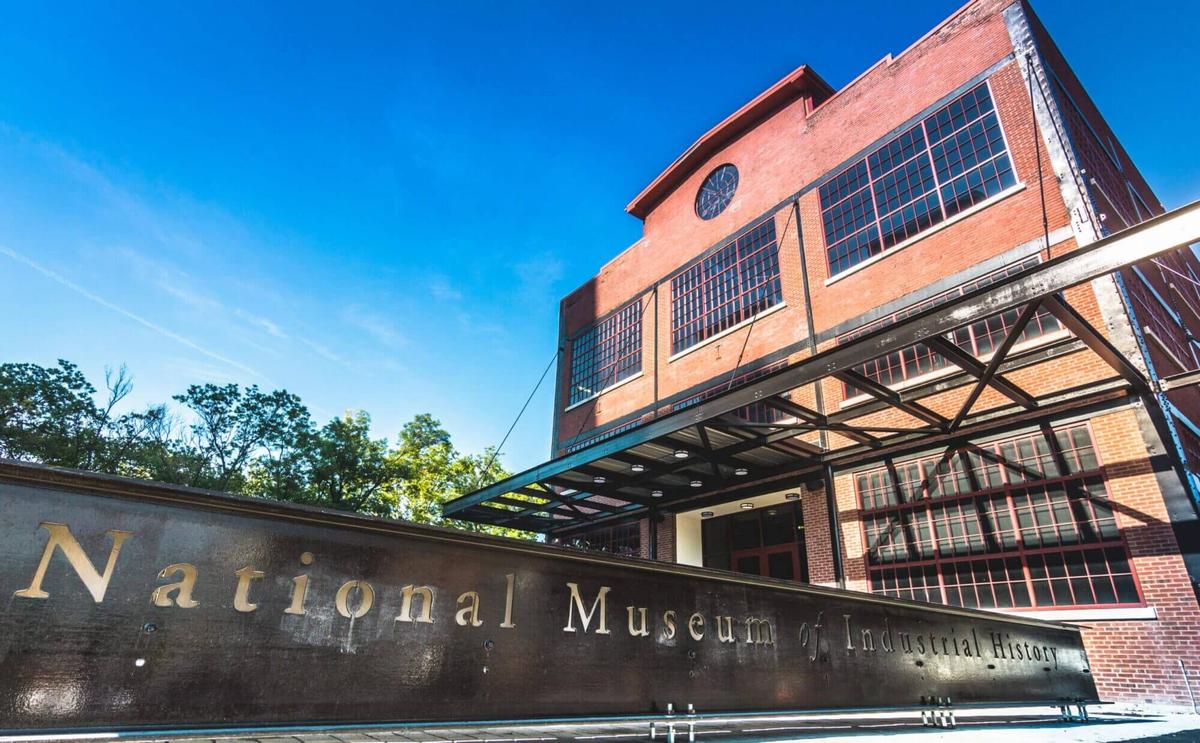
The building that houses the National Museum of Industrial History at 602 East 2nd Street in Bethlehem was once the Electric Repair Shop of the Bethlehem Steel plant. The tools that kept one of the largest industrial operations in American history running were maintained in this space. Today, the machines on display here tell a broader story: how America became an industrial powerhouse and what that transformation meant for the people who lived through it.
Machinery Hall
The museum's main gallery, Machinery Hall, is dominated by a 115 ton Corliss steam engine that looks like it could power a small city. Nearby, a twenty foot tall steam hammer demonstrates the scale of force that industrial manufacturing required. Interactive Bethlehem Steel displays put the local story in national context, showing how this single plant produced the steel for the George Washington Bridge, the Golden Gate Bridge, and dozens of other American landmarks.
The Bethlehem Steel Collection
The iron and steel collection includes the first piece of steel ever made at the Bethlehem Steel mill, a commemorative anvil, and three factory models that were originally used for employee training. These artifacts connect the museum directly to the site where it sits. You are standing in the building where workers repaired the equipment that made the steel that built the country. The history is not abstract here. It is embedded in the walls.
Unexpected Treasures
The museum holds surprises beyond steel. The Propane Gallery tells the story of Walter O. Snelling, an Allentown native who discovered how to distill propane, a development that changed energy production worldwide. A Jacquard Loom on display produced fabric for the White House for nearly eighty years, including during the Kennedy administration.
The Outdoor Artifact Park, added in 2020, extends the museum experience outside with seventeen thousand square feet of displays including the Steelworkers Veterans Memorial, which honors the Bethlehem Steel employees who served in America's armed forces.
Why It Matters
The National Museum of Industrial History does something important: it honors the work. Not the executives or the shareholders, but the machinists, steelworkers, and engineers who operated these machines and built their lives around this industry. In a region where the loss of Bethlehem Steel is still felt, the museum provides a place to remember what was accomplished and to understand why it mattered.
The museum is open Thursday through Sunday. It is located on the SteelStacks campus, which means you can combine a visit with a walk around the blast furnaces, a meal at one of the nearby restaurants, or an event at the ArtsQuest Center.