
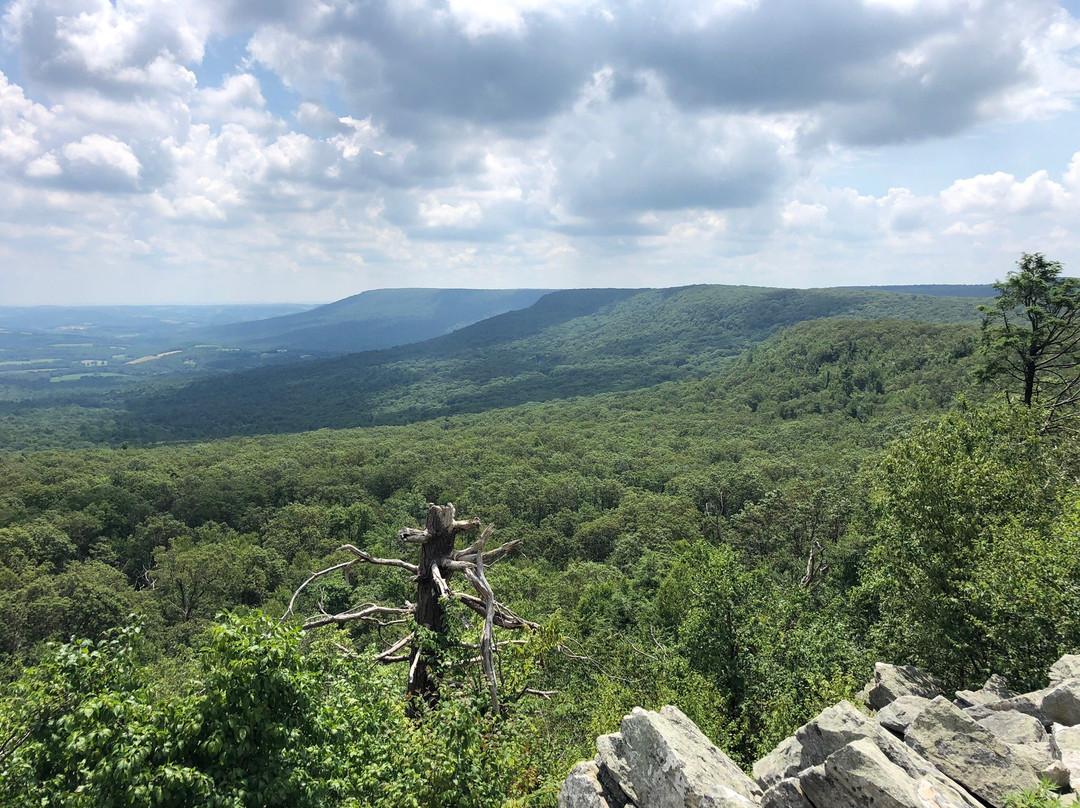
On a clear September morning at Hawk Mountain Sanctuary, the North Lookout is shoulder to shoulder with people staring at the sky. Binoculars are trained on the ridgeline. Someone calls out, "Broad wing, ten o'clock high." And then, like magic, the sky fills with birds.
Dozens, then hundreds of broad winged hawks riding the thermals in a swirling column called a kettle, climbing higher and higher until they're specks against the blue, then streaming south along the Kittatinny Ridge in a river of wings. On peak days, the counters tally thousands in a single afternoon.
This is fall migration at Hawk Mountain, and it is one of the most spectacular wildlife events you can witness without leaving the Lehigh Valley.
The World's First Raptor Sanctuary
Hawk Mountain sits on the Kittatinny Ridge near Kempton, about thirty minutes north of Allentown. In the early 1900s, this spot was known as a place where hunters gathered to shoot hawks for sport. Hundreds of raptors were killed on a single autumn day.
In 1934, conservationist Rosalie Edge purchased the property and established the world's first sanctuary for birds of prey. The shooting stopped. The counting began. Today, Hawk Mountain maintains the longest running raptor count in the world, with staff and volunteers recording every bird that passes the lookouts during migration season.
The Numbers
On average, about eighteen thousand raptors are counted during fall migration, which runs from mid August through mid December. The peak broad winged hawk migration hits in mid September, when a single day can produce counts in the thousands. October brings the greatest diversity, with red tailed hawks, sharp shinned hawks, Cooper's hawks, osprey, bald eagles, golden eagles, merlins, peregrine falcons, and northern harriers all represented.
Spring migration runs from April through mid May, with roughly a thousand birds recorded. The counts are smaller but the experience is equally rewarding, with fewer crowds and the anticipation of the returning birds.
The Lookouts
Two main lookouts offer different experiences. The South Lookout is accessible via a short, paved path from the visitor center, making it suitable for families and people with limited mobility. The views are excellent and the birding can be outstanding.
The North Lookout requires a more strenuous hike over rocky terrain, about a mile from the visitor center. The reward is a panoramic vista of the ridge and valley that stretches to the horizon. On clear days, you can see the curve of the earth. This is where the serious birders gather, and the atmosphere is a mix of quiet concentration and sudden excitement when a big flight appears.
More Than Birds
Hawk Mountain's trail system extends beyond the lookouts into the surrounding forest. The property covers more than 2,500 acres and offers miles of hiking through diverse habitats. Wildflowers bloom in spring. The forest canopy explodes with color in October. Even when the hawks aren't flying, the mountain is worth visiting.
The visitor center houses excellent exhibits on raptor biology, migration science, and the history of the sanctuary. Educational programs run throughout the year, and the staff is remarkably knowledgeable and welcoming.
A Lehigh Valley Tradition
For many Lehigh Valley families, a fall trip to Hawk Mountain is an annual tradition. Pack a thermos of coffee, dress in layers, bring binoculars, and settle in at the North Lookout. Wait. Watch. And when the kettles form and the sky fills with hawks riding the wind south, you'll understand why Rosalie Edge fought to save this place ninety years ago.